
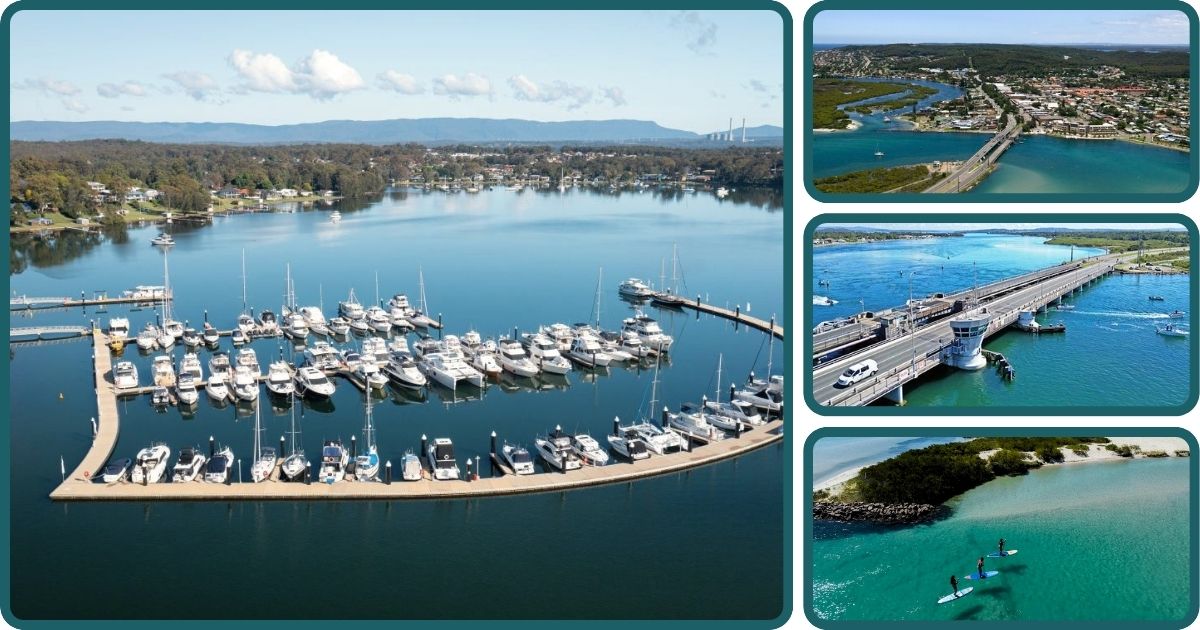
Lake Macquarie is Australia’s largest coastal saltwater lake, a huge 110 square kilometres of sheltered water ringed by beaches, bushland and a string of lakeside towns, more than four times the surface area of Sydney Harbour. It sits just south of Newcastle, close enough for an easy day trip from Sydney but big enough to fill a proper long weekend of boating, fishing, swimming and cycling. The lake itself is the drawcard rather than any single town, so this is a spread-out, self-directed kind of trip rather than a single destination to park up at.
| Mode | Time | Typical Cost | Best For |
|---|---|---|---|
| Car (direct via M1) | ~1h 44min (131km) | Fuel + tolls ~$25-35 | Flexibility, exploring multiple lakeside towns |
| Car (scenic Central Coast route) | ~2h 53min (170km) | Fuel + tolls ~$25-35 | Making the drive part of the day |
| Train + connecting bus | ~3h 30min | ~$9-12 | Budget travel, no car, one destination (Wangi Wangi) |
Who It Suits – Why Visit Lake Macquarie
Lake Macquarie suits boaters, kayakers and fishers who want flat, sheltered water rather than surf, families after a quieter alternative to the busier Central Coast beaches, and cyclists keen on a good rail trail. It’s less suited to travellers without a car who want to see more than one town in a day, since the lake’s towns are spread around a huge shoreline and public transport only really delivers you to one point on it. A day trip works fine for a single focus (a bike ride, a fish, an afternoon at the Reptile Park), but a weekend with your own car is the better way to see the lake’s spread of beaches and villages properly.
Sydney to Lake Macquarie by Car
The fastest route runs via the M1 Pacific Motorway for most of the way, about 131km and normally around 1 hour 44 minutes. Attractions worth folding in without much of a detour include the Hawkesbury River crossing itself, the Australian Reptile Park at Somersby, and Strickland State Forest and its waterfalls.
The Scenic Route (via the Central Coast)
The slower alternative turns off the M1 onto the Central Coast Highway and threads through Gosford, Erina, Wamberal, Forresters Beach, Bateau Bay, Long Jetty, The Entrance, Budgewoi and Doyalson, about 170km and around 2 hours 53 minutes all up. From Doyalson you can either continue on Wyee Road around to the city of Lake Macquarie, or turn onto the Pacific Highway and loop the eastern side of the lake past Wybung Head, Frazer Beach, Caves Beach and Swansea before arriving. Either way, this is the pick for a beach-hopping day rather than a straight run, since the Central Coast beach towns and Caves Beach in particular are worth a stop in their own right.
Attractions and Stopovers En Route
- The Australian Reptile Park at Somersby is a well-established stop just off the M1, open 9am-5pm daily except Christmas, home to over 2,000 animals and Australia’s antivenom program; check current ticket prices online before you go, as they vary by season and package.
- Strickland State Forest, near Mooney Mooney, has walking trails and waterfalls (Strickland Falls, Piles Creek Falls) worth a short detour if you want to stretch your legs partway.
- Caves Beach, on the eastern side of the lake near Swansea, is a genuine surf beach with sea caves at the southern end, worth building into the scenic route.
- Catherine Hill Bay, a bit further south again, is a beautifully preserved former coal-mining village with heritage cottages, a surf beach and a real sense of stepping back in time, one of the area’s better-kept secrets.
Road Rules, Speed Cameras and Enforcement
- The M1 Pacific Motorway is 110km/h for most of this stretch, with mobile and fixed camera enforcement and standard NSW fines from $137; double demerits apply on long weekends and school holidays.
- Speed limits drop sharply through the lakeside towns themselves (50-60km/h, with 40km/h school zones), particularly through Wangi Wangi, Toronto, Belmont and Swansea, so ease off well before you reach the built-up shoreline.
- The Swansea Bridge, where the Pacific Highway crosses the lake’s channel to the ocean, is a bascule (lifting) bridge that occasionally opens for boat traffic. For people who don’t travel the route often, it’s a bit of a novelty to stop while the road bridge raises, and usually it’s only a few-minute wait.
Breakdown Cover and Rental Vehicles
NRMA covers this entire route. There’s no car rental desk directly on the lake; if you need one locally, Newcastle (around 30-40 minutes north) has the nearest proper selection, otherwise pick up in Sydney before you set off.
Driving With Kids
The direct route is short enough to do without a real break, but the Australian Reptile Park just off the M1 is a good excuse to stop and stretch legs regardless of which route you take, and it’s popular enough with families that it’s worth building the visit into the day’s plan rather than treating it as an afterthought.
Sydney to Lake Macquarie by Train
There are several options depending on where you are planning to base yourself. The trains on this line are the all-new Mariyung cars featuring dedicated storage for luggage, prams, and bicycles, USB charging outlets, accessible toilets and baby-changing facilities. No booking is required.
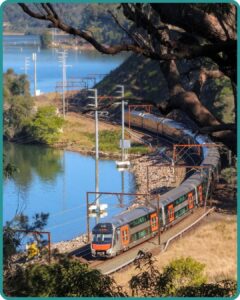
The Central Coast & Newcastle Line (CCN) runs from Sydney’s Central Station to Morisset Station on the lake’s southern edge, then a connecting local bus (route 275, Morisset to Toronto via Wangi Wangi and Fishing Point, run by Hunter Valley Buses) covers the final leg to the lake’s western shore whether that’s Wangi Wangi or Toronto. All up, budget around 3 hours 30 minutes, with fares typically around $9-12. Check the current 275 timetable before you travel, since it’s a local service with a lower frequency than city buses. See bus 275 route map.
Fassifern Station, a little further north on the same line, is another option worth knowing about if your plans centre on the lake’s northern or western shore rather than Wangi Wangi specifically, with its own local bus connections.
For the Warners Bay area, you can take the train to Cardiff station, then take a quick ride on bus 29. Total journey time is around 3 hours and is pretty straightforward.
For the eastern side of the lake and the coastline, focused on Swansea area and Caves Beach, you can take the same train to Cardiff Station and then bus 14 or bus 29 to Swansea. But be warned, it’s quite the journey at nearly 4 hours train and bus combined.
For local area bus maps, see CDC Bus for the western side and this map for Newcastle through to Swansea [PDF].
Check transportnsw.info for the best station for wherever you’re actually headed, since the lake’s shoreline is long enough that the “right” station depends on your destination.
Train With Kids
The train itself is an easy, comfortable leg, but the connecting local bus timetable is the part to plan around with tired kids, since it’s a local service rather than a frequent city route. Check the current 275 timetable before you travel and build in some buffer at Morisset rather than assuming a tight connection.
Which Should You Choose?
| Traveller Type | Best Option | Why |
|---|---|---|
| Want to see multiple lake towns | Car (direct route) | Fast enough to still have a full day, and essential to reach more than one town |
| Beach hopping along the way | Car (scenic Central Coast route) | Takes in the Central Coast beach towns and Caves Beach |
| No car, single destination | Train + bus | Cheapest, works well if Wangi Wangi (or wherever your train station lands you) is the whole plan |
Is It Worth Going Without a Car?
It works well if you’re happy to base yourself at one spot, since the train and connecting bus deliver you neatly to Wangi Wangi (or another station-linked town) and there’s plenty to do within walking distance once you’re there: a lakeside foreshore walk, a swim, a pub lunch. It’s a poor fit if your plan is to see several different parts of the lake in one visit, since the shoreline is long and there’s no single public transport route that loops around it. For a proper explore of the lake’s full spread, a car is the better tool for the job.
On the Water: Boating, Fishing and Watersports
Lake Macquarie’s sheltered, mostly shallow water makes it a good spot for boating, kayaking, stand-up paddleboarding and jet skiing without the swell and current of an ocean beach, and several operators around Speers Point, Warners Bay, Cams Wharf and Wangi Wangi hire out kayaks, small boats and jet skis by the hour or day. Fishing is popular right around the lake, from the foreshore or by boat, for bream, whiting, flathead and the occasional flounder. If you don’t have your own gear, most of the hire operators can point you towards the better spots depending on the tide and time of year.
On Land: Walking, Cycling and Foreshore Towns
The Fernleigh Track is the standout for cyclists and walkers: a 15km sealed shared path built along an old rail corridor, running from Adamstown in Newcastle through to Belmont on the lake’s northern shore via Kahibah, Whitebridge, Redhead and Jewells, with easy grades and a genuine bushland-and-wetland feel for most of its length. It’s flat, well-shaded in parts, and a good half-day out on hired or your own bikes. Around the lake itself, Speers Point Park and the Warners Bay foreshore path are popular for an easy stroll, playgrounds and picnic spots with lake views, while Belmont, Toronto and Wangi Wangi each have a compact main street with cafes and pubs worth a wander.
Frequently Asked Questions
Is Lake Macquarie bigger than Sydney Harbour?
Yes, significantly. Lake Macquarie covers about 110 square kilometres, more than four times the surface area of Sydney Harbour, making it Australia’s largest coastal saltwater lake.
Does the train go all the way to Lake Macquarie?
Not directly to the lakeside towns. The Central Coast & Newcastle Line stops at Morisset (or Fassifern, further north), and a connecting local bus covers the final leg into towns like Wangi Wangi. Check transportnsw.info for the best station and connection for your specific destination.
Can you fly to Lake Macquarie?
There’s no airport on the lake itself. Newcastle Airport, around 30-40 minutes north, is the nearest, but given the drive from Sydney is under 2 hours, flying isn’t a realistic option for this trip.
Is the Australian Reptile Park worth visiting on the way?
Yes, it’s a well-regarded, easy detour just off the M1 near Somersby, open 9am-5pm daily except Christmas, home to over 2,000 animals and Australia’s antivenom program. Check current ticket prices online, as they vary by season.