
Sydney taxis spent a decade being written off, and then quietly got better. Not the cars, particularly, and not the drivers’ opinions on rideshare. What changed is the rules. Since November 2025 a cab from the airport rank to the CBD has been a fixed $60 with the tolls and levies inside it, drivers who overcharge now face losing their authority rather than a stern letter, and there is a government hotline that actually gets people their money back.
The practical upshot is that on the single most common trip a visitor takes in this city, the taxi is now frequently the cheaper and always the more predictable option. Everywhere else, the meter still applies and it is worth knowing what the numbers are, because they went up on 1 June 2026 and almost every guide online is quoting figures from years ago. Here is the current lot, straight from the Fares Order.
Snapshot
| Flagfall (urban) | $5.17 |
| Distance rate | $2.61 per km for the first 12km, then $2.37 per km |
| Night rate (10pm-6am) | $3.10 per km for the first 12km, then $2.82 per km |
| Late night surcharge | $2.65 extra flagfall, 10pm to 6am Friday, Saturday and the night before a public holiday |
| Waiting time | 113 cents a minute ($67.78 an hour) whenever the cab is under 26km/h |
| Airport to CBD | Fixed $60 from a rank, or $80 for a requested maxi-taxi |
| Card surcharge | Capped at 5% of the total fare. That is a hard legal ceiling |
| How to complain | Taxi Fare Hotline, 1800 500 410. Have the plate number |
All figures from the Point to Point Transport (Fares) Order 2026, which commenced 1 June 2026. These are maximum fares for rank and hail trips, and operators may charge less.
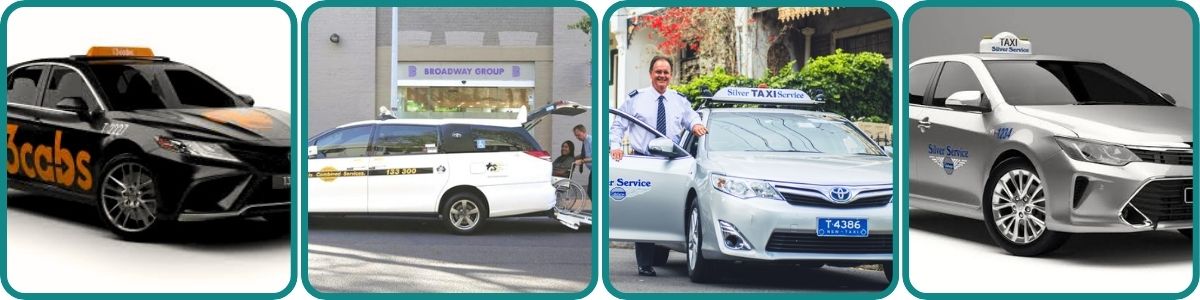
The Three Different Ways You Can Take a Taxi
This is the bit that confuses people, and it determines what you pay.
- Rank or hail. You get in at a rank or flag one down. Fares are government regulated with legal maximums, set out below. The meter must be used and the fare sign must be displayed inside the cab.
- Booked. You phone or use an app. Fares are no longer regulated. The operator sets the price, but must give you an upfront fare estimate before the trip starts, and the trip cannot legally begin until you have agreed to it. The estimate must also explain how the fare could vary and how that variation is calculated.
- Sydney Airport rank to the CBD. A fixed fare of $60 or $80, which overrides the meter rates entirely.
One important exception: if you use the Taxi Transport Subsidy Scheme, booked fares stay regulated for you, the meter must be used, and the fare must be at or below the regulated maximum.
The Regulated Fares, in Full
These apply to rank and hail trips in the Urban Area, which covers the Metropolitan, Newcastle and Wollongong transport districts plus the Blue Mountains, Central Coast and Shellharbour local government areas.
| Component | Maximum | When it applies |
|---|---|---|
| Hiring charge (flagfall) | $5.17 | Every trip, at all times |
| Peak time hiring charge | $2.65 | On top of flagfall, for trips starting 10pm to 6am on Friday, Saturday or the night before a public holiday |
| Distance rate | $2.61/km first 12km, then $2.37/km | While travelling at 26km/h or more |
| Night distance rate | $3.10/km first 12km, then $2.82/km | Trips commencing between 10pm and 6am. This is the standard rate plus a 20% night surcharge |
| Waiting time | 113.0 cents a minute ($67.78 an hour) | Whenever the vehicle is travelling under 26km/h, including at lights and in traffic |
| Passenger service levy | $1.32 | May be added to the fare. $1.20 plus GST |
| Tolls | at cost | Added on top if the trip incurs them |
| Maxi-cab surcharge | up to 150% of the fare | With five or more passengers, or if a maxi is requested at a Sydney Airport rank. Not applied when carrying a wheelchair user |
| Multiple hiring | 75% of the fare from each hirer | Only where all passengers start together, all agree, and all are heading the same general direction |
| Cleaning fee | up to $124.14 plus GST | Only if you soil the cab badly enough that it cannot be used again before cleaning |
Two useful details buried in the Fares Order. There is no longer a toll payable for a northbound crossing of the Sydney Harbour Bridge or Harbour Tunnel, and a return toll cannot be charged to you unless it was actually incurred on your journey. If a driver adds a bridge toll going north, that is wrong.
These components are indexed to CPI annually until 2030, when the next full review happens. The June 2026 increase was brought forward by the government to help drivers with cost pressures.
Rideshare vs Taxi in Sydney, Which Is Actually Cheaper
The honest answer is that it depends on four things: the time of day, whether you are at the airport, whether it is surging, and how far you are going. There is no universal winner any more, which is a genuine change from a few years ago. What follows is the arithmetic, so you can stop guessing.
Head to head
| Taxi (rank or hail) | Rideshare (Uber, DiDi) | |
|---|---|---|
| Who sets the price | Government. Legal maximum fares | The platform. No cap |
| Base charge | $5.17 flagfall, plus $2.65 from 10pm Fri, Sat and pre-holiday nights | About $2.55 base plus a $0.85 booking fee |
| Per kilometre | $2.61 for the first 12km, then $2.37. Night rate $3.10, then $2.82 | About $1.65, no night rate |
| Time charge | 113c a minute, but only below 26km/h | About $0.40 a minute, for the whole trip |
| Surge | Never. Fares are capped by law | 1x to 4x or more. Applied to the whole fare |
| Do you know the price first? | No, unless it is the airport fixed fare | Yes, always |
| Minimum fare | None beyond the flagfall | About $9, so very short trips are poor value |
| Airport to CBD | Fixed $60, tolls and levies included | $35-$55, higher with surge, no cap |
| Card surcharge | Capped at 5% of the fare by law | None, but no cash option either |
| Passenger levy | $1.32 may be added | $1.32 may be added |
| Cleaning fee | Regulated maximum, $124.14 plus GST | Platform decides. Reports of $150 and above |
| Cancellation fee | Not applicable at a rank | Yes, after a short grace period |
| Wheelchair accessible | Licensed WAT fleet. Fixed airport fare applies | Uber WAV exists but availability is limited |
| Child car seats | Accessible taxis must carry one. Others do not | None. Bring your own |
| Travel subsidy accepted | Yes. TTSS pays 50% up to $60 a trip | No equivalent |
Four trips, run both ways
Rough estimates, but they show the shape of it.
| The trip | Taxi | Rideshare | Winner |
|---|---|---|---|
| 10km across the inner city, 11am on a Tuesday | About $38-$42 once you add flagfall, distance, a few minutes of waiting time and the levy | About $27 | Rideshare, comfortably |
| Airport to the CBD, 6pm Friday | $60 flat, tolls and levies inside it | $35-$55 normally, but routinely past $60 in Friday surge | Check the app. Over about $55, take the rank |
| 3km home at 1am Saturday, heavy surge | About $20-$22, including the late-night flagfall and night distance rate | Around $37 at 2.5x surge | Taxi, clearly |
| 25km to an outer suburb, midday | About $70-$75, helped by the rate dropping after 12km | About $58 | Rideshare, but closer than you would think |
The decision rules
Take a taxi when:
- You are at a Sydney Airport rank heading into the CBD and the rideshare quote is above about $55. The $60 fixed fare cannot legally be exceeded.
- It is surging. Rain, a finished concert, New Year’s Eve, Vivid, a Saturday at 1am. Regulated fares do not move, and this is the single strongest case for a cab.
- You need a wheelchair accessible vehicle, or you are using the Taxi Transport Subsidy Scheme.
- Your phone is dead, you have no data, or you would rather not create an account.
- You want to pay cash.
Take a rideshare when:
- It is an ordinary trip at an ordinary time. Off peak, rideshare usually wins by $10 or more.
- You want the price locked in before you commit. This is its real advantage: no meter anxiety, no route disputes.
- You are going somewhere hard to explain, since the destination goes straight to the driver’s navigation.
- You are travelling in a group of five or more, where an UberXL often beats a maxi-taxi at 150% of the meter.
- You are not at a rank. Street hailing has effectively died outside the CBD, the airport and the big hotels.
Take neither when: the trip is under about two kilometres, where the rideshare minimum fare of around $9 makes it poor value and walking is often faster. Or when you need a car for a few hours with stops, where hourly car share is dramatically cheaper than either.
Where taxis have no competition
Two things are worth stating plainly, because price comparisons tend to bury them. Wheelchair accessible taxis are a licensed, regulated fleet, and the $60 airport fixed fare applies to them just as it does to a standard cab. And the Taxi Transport Subsidy Scheme pays half your fare up to a $60 subsidy per trip for eligible people with a severe permanent disability, with drivers now facing fines of up to $3,000 for refusing it. Rideshare has no equivalent to either. For passengers who need those things, this is not a price comparison at all. For more on rideshare and the service options in Sydney, see this article.
The short version
Off peak, rideshare. Surging, taxi. Airport to the city, check both and take the rank if the app is over $55. And if you need accessible transport or a subsidy, take a taxi, because it is the only one of the two that is set up for you.
The Sydney Airport Fixed Fare, and Exactly Where It Applies
This is the most useful thing on this page, so it is worth being precise.
Since 3 November 2025, and running as an 18-month trial, a one-way taxi trip from a Sydney Airport taxi rank to the designated Sydney CBD area is a fixed fare:
- $60 for a standard taxi, including a wheelchair accessible taxi
- $80 for a maxi-taxi carrying five or more passengers, or where a maxi is specifically requested (but not when carrying a wheelchair user)
What is included: all taxes, fees, levies and road tolls. The passenger service levy is not added. Multiple hiring charges do not apply.
The only things that can be added: a card payment surcharge of up to 5%, and a cleaning fee if you soil the vehicle.
The conditions: it must be a single, uninterrupted journey from a rank at T1 International or T2/T3 Domestic. Ask the driver to detour or stop somewhere and you lose the fixed fare and revert to the meter. Drivers must still run the meter and display the fixed fare on it. Failing to display it is a fare-related offence. Drivers may charge you less than $60, but charging more is an offence.
Where the boundary sits. The trial area is the part of the City of Sydney bounded by the harbour from Murray Street in Pyrmont in the west, the Royal Botanic Gardens to the north and east, then down Lincoln Crescent, Cowper Wharf Roadway, Sir John Young Crescent, Riley Street, William Street, College Street, Wentworth Avenue, Elizabeth Street, Chalmers Street, the Devonshire Street Tunnel, Lee Street, Regent Street, Harris Street, Allen Street and back along Murray Street to Pyrmont Bay. Both sides of every boundary road count as inside.
In plain terms: the CBD, The Rocks, Circular Quay, Darling Harbour, Pyrmont, Woolloomooloo, Haymarket and the very top of Surry Hills and Chippendale are in. Potts Point, Kings Cross, Darlinghurst, Newtown, Bondi and Manly are out, and those trips run on the normal meter.
Trips outside the area use standard metered maximum fares, with the driver charging a distance-based fare as calculated by the meter. Booked services are excluded entirely, which includes rideshare and pre-booked airport transfers. Those pay whatever was quoted and agreed at booking.
Taxi Transport Subsidy Scheme dockets can be used against the fixed fares. Also see the T8 Airport Line, which is a popular option and cheaper for a solo traveller. For the new Western Sydney Airport options, see this guide.
Paying, and the 5% Rule Worth Remembering
Cards are accepted universally and cash is still fine. The number to remember is that the maximum non-cash payment surcharge is 5% of the total fare, inclusive of GST, and that operates as a cap on all card surcharges combined. On a $100 fare, the maximum surcharge is $5. Full stop.
This is a legal maximum under the Fares Order, not a guideline, and it applies to both rank and hail trips and booked trips in a taxi. If you are charged more, you have been overcharged and the hotline below exists for exactly that.
Tipping is not expected in Australia. Rounding up is common and entirely optional.
Accessibility and the Subsidy Scheme
Wheelchair accessible taxis (WATs) are a licensed category with their own rules. Booking ahead through Wheelchair Book & Ride is the reliable way to get one in metropolitan Sydney. At the airport, kerbside supervisors can arrange wheelchair accessible vehicles, maxi taxis, five-seaters and station wagons for large luggage loads, and drivers assisting passengers into the terminal may use designated pre-booked taxi bays.
The Taxi Transport Subsidy Scheme (TTSS) pays 50% of your fare up to a $60 subsidy per trip if you live in NSW and have a severe, permanent disability that prevents you using public transport. It is not means tested. You need to be over school age, and your doctor or specialist completes part of the application. Apply through Service NSW, or call 131 500 to have a form posted. You hand the driver your TTSS Smartcard or a completed travel docket, and pay the balance yourself.
New penalties from 2026 back this up. Drivers who refuse to accept approved travel subsidy payments, or who mistreat passengers using wheelchairs, now face fines of up to $3,000. If a driver waves away your TTSS card, that is a reportable offence, not a misunderstanding.
Child restraints. Taxis have limited exemptions from the standard child restraint rules that apply to private cars, and all wheelchair accessible taxis must carry an approved child car seat. Ordinary taxis at a rank do not carry them. If you are travelling with an infant, book a service that supplies a capsule, or ask the airport kerbside supervisors to organise one.
The Networks
- 13cabs, the largest network, on 13 2227, with an app and 24/7 phone booking.
- Silver Service, the premium tier booked through 13cabs. Vehicles no more than three years old, typically Mercedes-Benz or Lexus, drivers with additional training.
- Legion Cabs, on 13 14 51, long established and strong on airport and corporate work.
- Premier Cabs, with more than 80 years of operation and good coverage across both the CBD and the suburbs.
- Regional networks like St George Cabs and Manly Warringah still serve their own patches and are often faster than a city network for a local pickup.
Every taxi in NSW must carry security cameras. Cabs that rank or hail in the metropolitan, Newcastle, Wollongong or Central Coast areas must also have an approved vehicle tracking device and a duress alarm.
At the Airport
Each terminal has its own sheltered rank, with supervisors on duty during peak periods.
- Drivers must accept all fares, short or long. Refusing a short trip is a fare-related offence, and the kerbside team will intervene if a driver tries it.
- Taxis cannot legally pick up away from a rank. Drivers face fines up to $5,000 for it, so do not try to flag one on the airport approach roads.
- The meter must be used and the airport toll included in the total.
- WeKnow is a newer in-terminal option: a desk in T1 International Arrivals plus digital kiosks near Carousel 7, which books a premium taxi with a price shown upfront, gives you a PIN to match your driver, and puts you in the priority pick-up lane rather than the general queue.
What Locals Know
The fixed fare only survives a straight run. If you ask the driver to swing past a hotel in Potts Point on the way, you have broken the single uninterrupted journey and the meter takes over. Decide before you get in.
Check the fare sign. Every taxi must display the applicable fares and permitted extra charges inside the vehicle, and drivers cannot charge the June 2026 maximums unless the new rates are on the sticker. If you cannot see it, ask.
Waiting time is the hidden cost of peak hour. At 113 cents a minute below 26km/h, twenty minutes crawling along William Street adds over $22 before you have travelled far at all. A trip that would be $40 at 10am can be $60 at 5.30pm on the same route.
The 12-kilometre step-down is real. The distance rate drops from $2.61 to $2.37 per kilometre after 12km, which makes long suburban runs relatively better value than the first few kilometres suggest.
Book, do not hail, outside the CBD. Street hailing basically works in the city centre, at the airport and around major hotels. Everywhere else, phone a network or use an app.
The late-night surcharge only hits Friday and Saturday. The $2.65 peak hiring charge applies from 10pm on Friday, Saturday and the night before a public holiday. A Tuesday midnight trip still gets the night distance rate but not the extra flagfall.
Ranks worth knowing in the city: outside Central and Town Hall stations, Circular Quay, the QVB on York Street, and outside the larger hotels around Hyde Park. These have cabs when apps are surging.
Complaints, and How to Get a Refund
NSW has become noticeably better at this, and the process works if you use it.
- Ring the Taxi Fare Hotline on 1800 500 410, or report online through the Point to Point Transport Commissioner. This is the main route and it results in refunds regularly. Since stickers advertising the hotline became mandatory in taxis in September 2023, reported complaints and refunds have both risen sharply. Have ready: the number plate, the date and time, the location, and the taxi company.
- Contact the taxi service provider directly for service quality issues: driver conduct, vehicle condition, a booking that never arrived.
- Report safety issues to the Commissioner, who has prosecution powers and uses them. Drivers have been fined thousands of dollars for fare-related offences, and repeat offenders now risk losing their driver authority under a two-strikes approach.
- NSW Fair Trading on 13 32 20 for unresolved fare disputes.
- Your card issuer for a chargeback if you were overcharged on a card and cannot get it back any other way.
What actually counts as an offence: failing to use the meter, overcharging, refusing a passenger because the trip is short, charging more than the airport fixed fare, not displaying the fixed fare on the meter, adding a card surcharge above 5%, and refusing an approved travel subsidy payment. None of these are grey areas.
When is a Taxi Really Worth It?
For the airport run into the CBD, yes, and it is not close. Sixty dollars all in, no surge, no app, no negotiation, and a legal ceiling if the driver tries anything. Check your rideshare quote, and if it is over about $55, walk to the rank.
For accessibility needs, taxis are the only serious option in Sydney. The WAT fleet, the mandatory child seats in accessible vehicles and the TTSS subsidy have no rideshare equivalent.
For everything else, they are a reasonable second choice rather than a first. Ordinary cross-town trips at ordinary times will usually be cheaper in a rideshare, and you will know the price before you get in.
Where they earn their keep is the night everything goes wrong. Rain, a finished concert, a phone at 4% battery, and every app quoting triple. That is when a rank with a queue and a regulated meter stops being old-fashioned and starts being the sensible thing.
Frequently Asked Questions
How much is a taxi from Sydney Airport to the city?
A fixed $60 for a standard taxi from a Sydney Airport rank to the designated CBD area, or $80 for a maxi-taxi with five or more passengers. That price includes all taxes, fees, levies and tolls. Only a card surcharge of up to 5% and a cleaning fee can be added. It applies to rank trips only, not to booked services or rideshare.
What are the current taxi fares in Sydney?
For rank and hail trips in urban NSW from 1 June 2026: $5.17 flagfall, $2.61 per kilometre for the first 12km then $2.37 per kilometre, rising to $3.10 and $2.82 per kilometre for trips starting between 10pm and 6am. Waiting time is 113 cents a minute whenever the cab is below 26km/h. A $2.65 extra hiring charge applies from 10pm on Friday, Saturday and the night before a public holiday.
Are booked taxi fares regulated in NSW?
No. Only rank and hail fares are capped. Booked taxi fares are set by the operator, but they must give you an upfront fare estimate before the trip starts, the trip cannot begin until you agree to it, and the estimate must explain how the fare could vary. The exception is Taxi Transport Subsidy Scheme trips, where booked fares stay regulated and the meter must be used.
Does the Sydney Airport fixed fare cover Bondi or Kings Cross?
No. The trial area covers the CBD, The Rocks, Circular Quay, Darling Harbour, Pyrmont, Woolloomooloo, Haymarket and the edges of Surry Hills and Chippendale. Potts Point, Kings Cross, Darlinghurst, Newtown, Bondi and Manly all fall outside it and run on the normal meter.
How much can a taxi charge for paying by card in NSW?
A maximum of 5% of the total fare, inclusive of GST, and that is a cap on all card surcharges combined. On a $100 fare the most you can be charged is $5. Anything above that is an overcharge and should be reported to the Taxi Fare Hotline on 1800 500 410.
Can a Sydney taxi driver refuse a short trip?
No. Refusing a passenger because the distance is short is a fare-related offence. At Sydney Airport the kerbside management team will intervene, and drivers face penalties including the loss of their driver authority for repeat offences.
What is the cleaning fee if I am sick in a Sydney taxi?
Up to $124.14 plus GST, and only where the vehicle is soiled badly enough that it could not reasonably carry another passenger before being cleaned. It is a regulated maximum, not an amount the driver can invent.
How do I complain about a Sydney taxi fare?
Call the Point to Point Transport Commissioner’s Taxi Fare Hotline on 1800 500 410 or report it online. Have the number plate, the date, time and location, and the taxi company. Refunds are common. For service quality, contact the taxi network directly, and for unresolved disputes contact NSW Fair Trading on 13 32 20.
Do I need to tip a taxi driver in Sydney?
No. Tipping is not expected in Australia. Rounding the fare up is common but entirely optional, and no driver will react badly if you pay the exact amount.
Is there still a toll for crossing the Harbour Bridge in a taxi?
Not northbound. The Fares Order confirms no toll is payable for a northbound crossing of the Sydney Harbour Bridge or Harbour Tunnel, and a return toll cannot be charged unless it was actually incurred on your journey. Note that two-way tolling on both crossings is scheduled to begin in late 2028.
How do I get a wheelchair accessible taxi in Sydney?
Book ahead through Wheelchair Book & Ride for metropolitan Sydney. All wheelchair accessible taxis must carry an approved child car seat, and the airport fixed fare of $60 applies to wheelchair accessible services. At the airport, kerbside supervisors can arrange an accessible vehicle. Drivers who mistreat passengers using wheelchairs now face fines of up to $3,000.
What is the Taxi Transport Subsidy Scheme?
A NSW scheme paying 50% of your taxi fare up to a $60 subsidy per trip if you have a severe, permanent disability that prevents you using public transport. It is not means tested. Apply through Service NSW with a section completed by your doctor, or call 131 500. You present a TTSS Smartcard or travel docket and pay the balance. Drivers refusing to accept it face fines of up to $3,000.
Useful Links
- Transport for NSW taxi information, including the current Fares Order
- Sydney Airport fixed fare trial, with the boundary map and fact sheets in eight languages
- Point to Point Transport Commissioner, information for passengers
- Report a taxi fare issue online, or call 1800 500 410
- Taxi Transport Subsidy Scheme
- Book a wheelchair accessible taxi
- Sydney Airport taxi and rideshare information
- NSW Fair Trading: 13 32 20
All regulated fares taken from the Point to Point Transport (Fares) Order 2026, effective 1 June 2026, and verified July 2026. Fare components are indexed to CPI annually until the next full review in 2030. Operators may charge less than the maximum.