
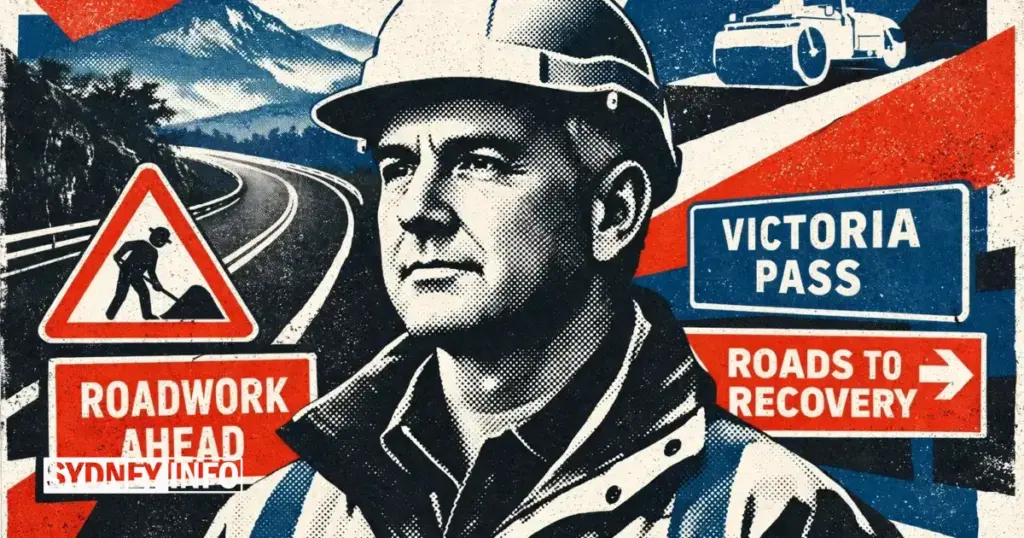
Blue Mountains City Council has returned to upper-mountains roads postponed before winter, beginning its 2026–2027 resealing program as warmer and drier conditions improve the chance of a durable result. The work will bring temporary traffic controls, reduced speeds, short delays and possible parking restrictions to locations across the city.
The timing matters. Spray sealing relies on a dry road surface and suitable temperatures so the bitumen binder adheres properly and aggregate embeds securely, meaning crews cannot treat every location on one fixed calendar. Council says the postponed sites remain planned, with signs left in place to advise residents and road users that the work had been delayed rather than cancelled.
The upper-mountains locations will be completed before crews progress through the wider program. Suitable weather windows are limited, so works may be rescheduled if conditions become cold or wet again.
Residents near planned sites will receive notifications, while roadside signs will identify work areas before and during construction. Drivers should slow down, follow traffic controllers and allow extra time for short delays, particularly on narrow roads with bends, steep grades and limited shoulders.
Blue Mountains Mayor Mark Greenhill said completing resealing at the right time could prevent more serious pavement damage. "Resealing roads at the right time helps prevent more serious deterioration and can extend the life of the road," Cr Greenhill said.
Mayor Greenhill said Council recognised that roadworks could temporarily disrupt residents and road users. "We know roadworks can cause some temporary disruption, and we thank residents and road users for their patience while this important maintenance work is carried out," he said.
Resealing is a preventative surface treatment. It helps keep water out of the pavement and extends the life of a road where the underlying structure remains serviceable, while landslip damage and major subgrade failures require drainage, stabilisation, retaining structures or full reconstruction.
The distinction is important across the Blue Mountains. Council reported approximately 37 kilometres of resealing at more than 100 priority locations during 2025–2026, exceeding its annual target despite extended wet weather, after completing a 76-road resealing program during 2024–2025.
Council prioritises work according to road condition, safety, traffic volumes and the risk of further deterioration. A road that appears acceptable to a passing driver can therefore be treated before a visibly rougher section if engineers assess that water infiltration is likely to accelerate pavement failure.
The Road Renewal and Repair Program forms part of Council’s annual Asset Works Program and is jointly funded by Blue Mountains City Council and the Australian Government through Roads to Recovery grants. Funding is spread across local roads and must also support heavy patching, pothole repairs, drainage upgrades and disaster recovery.
The program sits within a much larger road-resilience challenge. Council has reported damage at 101 landslip sites, while an August 2026 NSW Government announcement committed $95 million in joint Australian and NSW funding for landslip remediation at locations including Mount Wilson, Mount Irvine, Hartley Vale, Megalong Valley, Kanimbla Valley and Glenbrook.
Those projects address ground movement and structural instability, rather than surface wear. The separate Great Western Highway response includes a $200 million federal and NSW package to rebuild Mitchell’s Causeway and add an eastbound climbing lane after cracking and ground movement closed Victoria Pass in March 2026, with reopening expected in the second quarter of 2027.
Andrew Chalk, president of the Wolgan Valley Association, described the funding for a permanent access solution after the long-term closure of Wolgan Road as bringing a "huge sense of relief" following years of uncertainty.
Earlier ABC News coverage also recorded the concerns of Mount Irvine resident Robyn Scrivener about Bowen’s Creek Road Bridge. "It’s really sad, really sad that such a valuable asset to two communities is suffering such neglect, it desperately concerns me," she said in 2014.
For drivers, the immediate issue will be managing work zones rather than navigating a single citywide closure. Street sweeping is carried out after resealing, but loose stones may remain briefly, so motorists should increase their following distance and avoid sudden braking or steering on freshly treated surfaces.
Residents should check Council notifications and roadside signs before parking near a planned site or accessing a property. Visitors should check the Council roadworks page and Live Traffic NSW before leaving, especially after wet weather, and should treat unofficial street lists or old notices cautiously because construction sequencing can change.
Driving remains the practical option for most local residents and visitors moving between Blue Mountains villages, but no dedicated shuttle or alternative transport arrangement has been announced for the resealing program. People travelling towards Katoomba, Leura, Wentworth Falls, Blackheath, Mount Wilson or other scenic destinations should allow extra time and avoid stopping in signed work areas.
Related to This Story
Blue Mountains City Council
Blue Mountains City Council is responsible for roads, drainage, public facilities and services across the Blue Mountains Local Government Area. Its road program serves towns, villages, rural properties, emergency services, freight routes and tourism destinations.
Roads to Recovery
Roads to Recovery is an Australian Government funding program that assists councils with eligible road construction, maintenance and renewal. Blue Mountains City Council uses the funding alongside its own resources for local road works.
Great Western Highway
The Great Western Highway is the main east-west road connection through the Blue Mountains between Western Sydney and the Central West. Its Victoria Pass and Mitchell’s Causeway sections are subject to a separate reconstruction project following ground movement in 2026.
The 2026–2027 resealing program is expected to move between many roads and villages rather than remain concentrated in one town. For anyone encountering loose aggregate, the safest response is simple: slow down, leave more space and follow the temporary controls in place.