
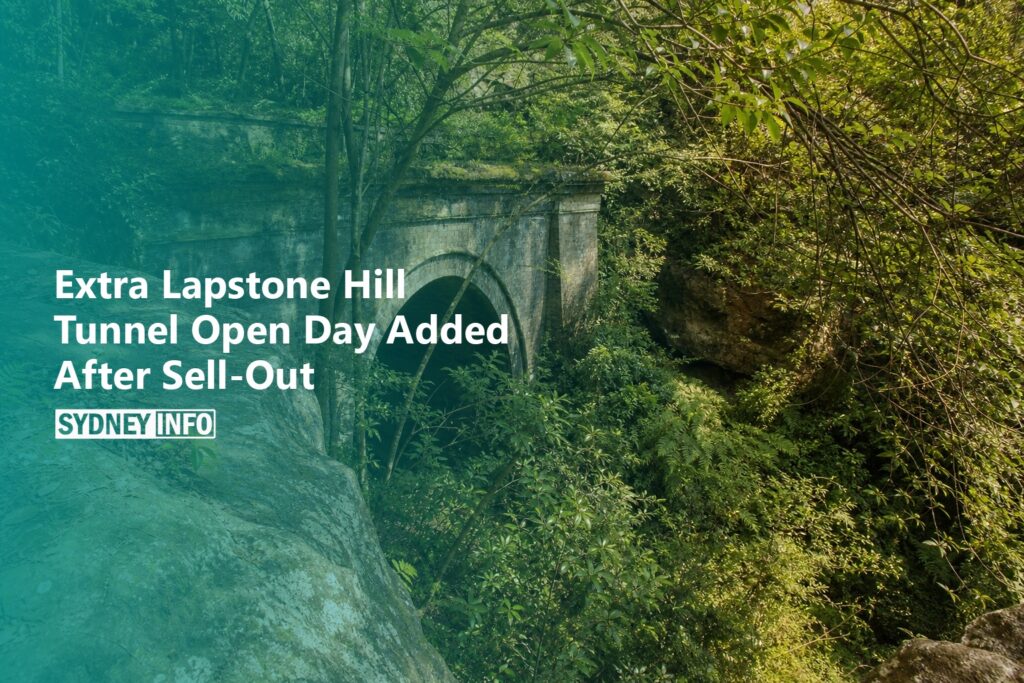
Blue Mountains City Council has added a third open day for the Lapstone Hill Tunnel on Sunday 2 August after the initial 25 and 26 July weekend sold out, but the 634-metre heritage site will close again immediately afterwards until major funding is secured.
The extra date gives residents and visitors a rare walk through the former railway tunnel before it is locked up indefinitely pending millions of dollars in remediation, drainage, lighting, pathway connections and safety treatments. Council is seeking state and federal investment to permanently reopen the tunnel and its surrounding precinct as a community recreation destination.
“The speed at which these events sold out shows just how much people want to experience this remarkable place and see it returned to community use,” Blue Mountains Mayor Mark Greenhill said.
Council wants to transform the tunnel and bushland around it into a safe, accessible space for walking, cycling, recreation, events and tourism. Plans include picnic shelters, a pump track, car parking and landscaping. A Conservation Management Plan has been prepared and $2.5 million in NSW Government funding was allocated in 2021 to advance public access, but far more is needed.
The tunnel, also known as Glenbrook Tunnel, was built between 1891 and 1892 by contractor George Proudfoot as a single-track railway deviation bypassing the steep Lapstone Zig Zag. Poor ventilation and water seepage caused trains to stall, and it closed in 1913. It later served as a mushroom farm for the Rowe family and, from 1942, as a Royal Australian Air Force storage depot for mustard gas. The site was added to the NSW State Heritage Register on 5 August 2011. Sir Arthur Streeton’s 1891 painting ‘Fire’s On!’ depicts a fatal blasting accident during its construction.
Related to This Story
Blue Mountains City Council
Local government authority responsible for the City of Blue Mountains LGA, including planning, heritage management and community facilities. It owns part of the Lapstone Hill Tunnel site and is leading efforts to reopen it for public use.
Glenbrook Tunnel (1892)
Heritage-listed 634-metre former railway tunnel built 1891-1892, also known as Lapstone Hill Tunnel. It has served as a mushroom farm and WWII chemical storage facility and is listed on the NSW State Heritage Register since 2011.
Community interest is strong. A Reddit user who attended a previous public open day described the tunnel as a “fantastic link” and expressed hope it would open full-time. Earlier council surveys in 2024 showed widespread support for returning the site to public use, and a YourSay consultation gathered feedback on design elements and upgrade priorities.
Anyone wanting to visit on 2 August must register immediately at bmcc.nsw.gov.au/lapstone-tunnel. Capacity is limited and the July weekend booked out quickly. After Sunday 2 August the tunnel will close again and remain off-limits until the necessary remediation and infrastructure works are fully funded and completed — a process likely to take years.
For those attending, the easiest access is by train on the Blue Mountains Line from Central Station to Glenbrook, then a short walk to the Barnet Street starting point for the guided two-kilometre tours. Limited on-site parking will be available. Many visitors combine the tunnel experience with a stop at Glenbrook village’s cafes and shops or other Lower Blue Mountains heritage sites.
Had things gone to plan in the 1890s, the tunnel might have remained a working railway. Instead, mustard gas and mushrooms filled the darkness for decades. Now, if council secures the funding, its next life could be as a peaceful recreation link for walkers and cyclists. ‘Fire’s On!’ captured a fatal moment in its construction; the hope is that its future will be far quieter.