
The Australian National Maritime Museum announced on 28 July 2026 the most significant acquisition in its 35-year history: a multi-million-dollar private collection of rare maps, manuscripts and objects donated by the museum’s former chair John Mullen AM and his wife Jacqui.
Selected items from the John and Jacqui Mullen Collection went on public display from 23 July in the Under Southern Skies exhibition at Darling Harbour, giving Sydney a rare opportunity to see primary records that trace early European exploration of Australia and the Pacific from the 1600s to the 1840s.
Museum Director and CEO Daryl Karp AM said the gift was unparalleled. “This collection represents the finest, most significant acquisition offered to the National Maritime Collection in its 35 years. It is a collection that museums have been formed around. We are so thankful to John and Jacqui for their generosity and for John’s singular and discerning vision in amassing this collection.”
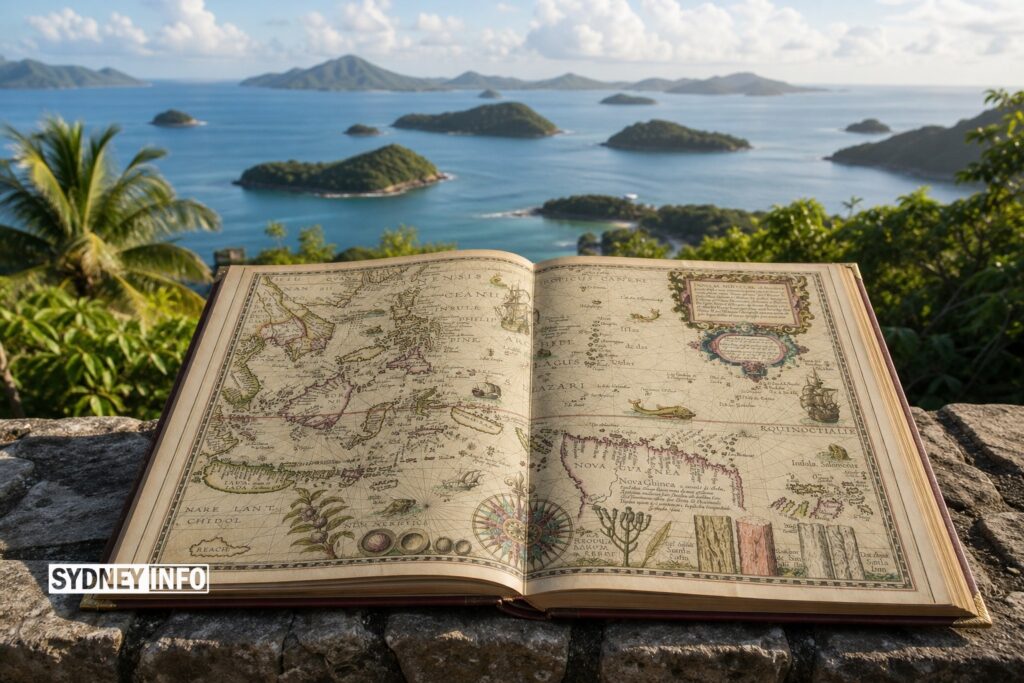
The collection includes Petrus Plancius’ 1617 coloured engraving of the known world, labelled with a landmass south-west of New Guinea called “Beach”, and the exceptionally rare 1611 Memorial No. 11 by Pedro Fernandes de Queirós, in which he sought Spanish royal support for further voyages after sighting what he believed was a southern continent. A first French translation of the Batavia shipwreck account, a 1729 Dampier edition, illustrated Freycinet voyage volumes, and Dumont d’Urville’s first edition account of the 1826–1829 Astrolabe expedition are among other highlights. The collection also holds chronometers and silver dinner plates owned by Viscount Sydney, a direct link to the city’s namesake.
Curator Dr Kimberley Webber said the material’s value extends beyond cartographic and navigational history. “John and Jacqui Mullen’s extraordinary gift enables the museum to tell the stories of early European interest in the southern continent, and the courage, skills and determination of the adventurers who sought to learn more about it. Importantly, it also includes first-hand accounts that document some of the earliest encounters between Europeans and First Nations peoples, providing a rich resource for exhibition, research and teaching.”
John Mullen assembled the collection over five decades while leading the Silentworld Foundation, a maritime archaeology philanthropic body, and serving more than 15 years as the museum’s chair. He and Jacqui donated the items through the Australian Government’s Cultural Gifts Program. “We are delighted that this collection will now belong to the Australian people,” Mullen said. “These objects and manuscripts tell extraordinary stories about how the world came to understand this continent and its peoples.”
Related to This Story
Australian National Maritime Museum
Australia’s national museum dedicated to maritime history, located in Darling Harbour, Sydney. It holds the National Maritime Collection and opened in 1991, attracting visitors with exhibitions on exploration, shipwrecks and seafaring heritage.
The Under Southern Skies gallery, which already holds more than 500 objects, now deepens its coverage of early European knowledge of the Great South Land. Entry to the museum’s permanent galleries is free, and the venue is open daily from 10am to 4pm.
Public transport is strongly recommended. Pyrmont Bay light rail station is a one-minute walk, and Town Hall railway station is 10 minutes away by foot. Ferries and buses also serve the precinct, and walking across Pyrmont Bridge from the CBD takes about 12 minutes. Nearby, visitors can combine a trip with the SEA LIFE Sydney Aquarium or waterfront dining at King Street Wharf.
Only a first tranche of the donated collection is on display immediately, with more items arriving as the transfer is completed. For anyone wanting to see a 1617 map that shaped European imaginings of this continent, the gallery is already open.