
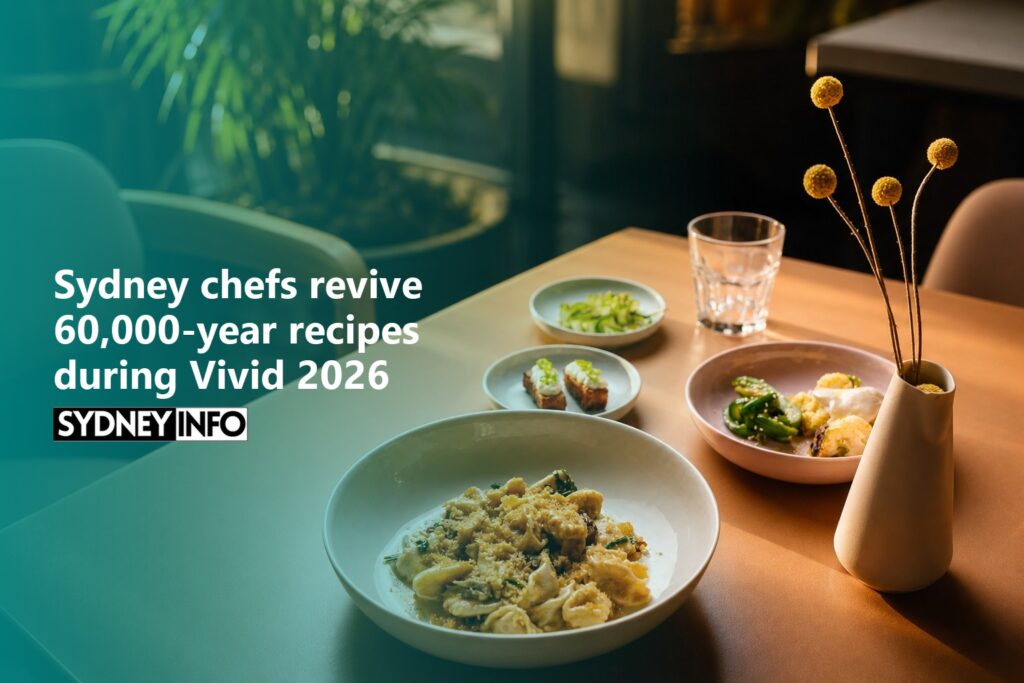
The Warakirri Dining Experience on 31 May will feature Weilwan chef Sharon Winsor serving an intimate multi-course meal built on native Australian ingredients that have sustained Aboriginal communities for over 60,000 years.
The $150-per-person dinner forms part of Vivid Sydney 2026 (22 May to 13 June), where the city’s top restaurants are embracing finger lime, wattleseed, and lemon myrtle to reshape Sydney’s dining scene with ingredients that predate European settlement by millennia.
For diners, this represents the most accessible entry point yet into Indigenous culinary traditions that have moved from the margins to the centre of Sydney’s restaurant culture. The Vivid program includes storytelling alongside the meals, connecting contemporary techniques with ancient knowledge systems.
Mark Olive, Bundjalung man and chef at Midden beneath the Opera House sails, described the cultural significance of the location. “The land on which the Opera House stands was a gathering place for ceremony and culture for thousands of years before the building itself was ever conceived, and I hope the menu we’ve created will give guests a real taste of that millennia-old history.”
Midden’s menu features wattleseed, bush honey, and saltbush alongside modern preparations of kangaroo prosciutto and crocodile tandoori. The restaurant’s name references the Indigenous word for shell heaps, where First Nations people cooked, ate, and gathered as families for thousands of years.
The movement extends beyond fine dining. Bush in Redfern offers Indigenous flavours including finger lime, saltbush, and wild herbs in a laid-back setting, while NEL in the Sydney CBD features an 11-course culinary odyssey with native ingredients consistently featured across changing seasonal menus.
Indigenous restaurateurs are driving the expansion into mainstream dining. Nyoka Hrabinsky, Aboriginal ethnobotanist and owner of The Lillipad Cafe, explained her mission to bridge the accessibility gap. “We tried looking around for indigenous places to eat, and either it’s expensive fancy restaurants or nothing at all. We really want to make it accessible for everyone.”
The current boom traces back to 2016, when chef Rene Redzepi’s Noma Sydney pop-up had 27,000+ people on the waiting list. That 10-week showcase of native Australian ingredients marked a turning point for the industry.
Mark Olive opened his first solo Indigenous restaurant in the mid-1990s and later introduced Australians to native herbs and spices through his 2006 TV series Outback Café. In July 2023, he opened the current incarnation of Midden at the Sydney Opera House.
Luke Bourke, guest chef at Sydney Seafood School and National Indigenous Culinary Institute alumnus, emphasised the importance of supporting Indigenous suppliers. “Most Indigenous food ingredients have healing and superfood properties. It’s important to remember to support Indigenous suppliers.”
Critics note that in an industry built on millennia of Indigenous knowledge, Indigenous growers and suppliers are not reaping proportional benefits. Colonial attitudes toward traditional cuisine persist despite growing non-Indigenous Australian and international tourist interest in bush tucker-inspired meals.
For visitors during Vivid Sydney, the Warakirri experience offers direct cultural engagement beyond ingredients alone. Yvette Lever, owner of Tin Humpy Cafe, described the broader mission: “In focusing on indigenous flavours, I’m helping bring Aboriginal Australians back into Australia’s European-centered historical narrative through the indigenous foods, flavours, and tastes of our lands.”
The National Indigenous Culinary Institute supports young Aboriginal chefs through apprenticeships and career pathways, working with established chefs like Bourke. By sourcing native ingredients from Indigenous communities, restaurants support sustainable practices and empower those who have maintained these traditions across 60,000 years of continuous culture.
Beyond Warakirri, Vivid Sydney 2026 includes Oysters in the House on 7 June at Shell House, celebrating Sydney Rock Oyster and NSW Semillon from $50 per person. Both events require advance booking through the Vivid Sydney website.
Quick Facts
Midden by Mark Olive
A multi-award-winning restaurant at the Sydney Opera House showcasing contemporary Australian cuisine infused with native ingredients and Indigenous storytelling, offering spectacular harbour views and seasonal menus celebrating Country, culture and connection.
National Indigenous Culinary Institute
An organisation that supports young Aboriginal chefs through apprenticeships and helps establish and support their career pathways in collaboration with guest chefs and culinary schools.
Vivid Sydney
Vivid Sydney 2026 is billed as the southern hemisphere’s largest annual festival of light, music, ideas and food, showcasing New South Wales’ time-honoured native ingredients.