
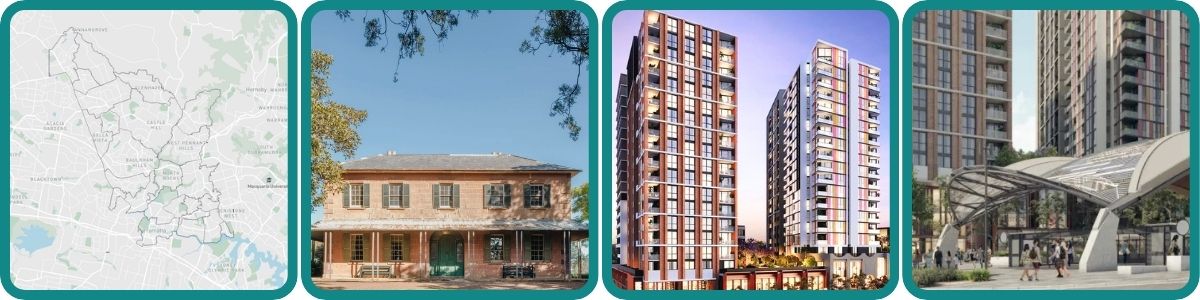
The Hills District sits at the intersection of two Sydneys: the established garden suburbs that grew up around Castle Hill and Dural, and the master-planned new communities spreading across Kellyville, Rouse Hill and Box Hill. What ties them together is a family-first character, good schools, and a strong local identity that firmly resists being lumped in with “Western Sydney.”
Geographically, the Hills is Greater Western Sydney. Culturally, it is something quite different. The professional households, high-achieving schools, leafy streets, and community institutions place it closer in spirit to the Upper North Shore than to Penrith or Blacktown. Hills residents know this distinction matters, and they will tell you so.
The Metro Northwest, which opened in 2019, changed the equation considerably. A region that once demanded an hour-plus bus crawl to the CBD is now 33 minutes from Castle Hill to Barangaroo. That shift unlocked a new wave of buyers who wanted space, schools, and value without the commute penalty, and the Hills has been growing fast ever since.
What you find here ranges from five-acre acreage estates in Dural, where horse properties and prestige homes sit behind tall hedges, to freshly poured concrete slabs in Box Hill, where one of Sydney’s largest greenfield developments is mid-build. The Hills contains multitudes.
The Hills District is centred on The Hills Shire Council LGA, which covers approximately 386 square kilometres roughly 30-40 kilometres north-west of the Sydney CBD. The LGA is bounded by Hawkesbury City to the north, Hornsby Shire to the east, the City of Parramatta to the south, and Blacktown City to the west.
As a regional identity, the Hills extends slightly beyond the strict LGA boundary and informally includes neighbouring suburbs in Hornsby, Parramatta, and Blacktown councils. For most practical purposes, when people say “the Hills” they mean the Hills Shire, with Cherrybrook, Pennant Hills, and North Rocks often included by proximity and character.
The region connects to Sydney’s other major regions via the M2 Motorway (to Parramatta and CBD) and the Metro Northwest (through Chatswood, linking to the CBD and beyond). For a full breakdown of how the Hills fits into Sydney’s council structure, see our Sydney suburbs by municipality guide.
Before May 2019, the Hills had no heavy rail. The suburb was served by buses that took 60-90 minutes to reach the CBD, and that commute was baked into every property price. The Sydney Metro Northwest changed this completely.
Five Hills stations now connect the region directly to the city: Castle Hill and Hills Showground (underground), then Bella Vista, Norwest, Kellyville, and Rouse Hill (above ground, extending the line further out). Castle Hill to Barangaroo takes about 33 minutes. Services run every 4-5 minutes at peak. The Metro added 3,000 new parking spaces across Hills stations, and property prices near stations responded immediately, with Castle Hill growing 71.52% between 2013 and 2020.
The practical result: the Hills is no longer car-dependent in its core areas. You can live in Castle Hill, work in Barangaroo, and spend your evenings at Norwest lakeside restaurants without touching a steering wheel.
The Hills is not one place. There is the Hills of Dural, Glenhaven, and Kenthurst: five-acre blocks, horse properties, prestige homes behind rural hedgerows, long-term residents who moved here for space and have no plans to leave. And there is the Hills of Box Hill, Kellyville, and Rouse Hill: master-planned communities, large family homes on 400-500sqm blocks, new town centres, and streets that did not exist ten years ago.
These two Hills are close in distance but sharply different in character. Dural is semi-rural and fiercely private. Box Hill is still being built. The tension between old Hills and new Hills shapes local identity, planning debates, and community conversations across the region.
Schools are a primary reason families move to the Hills. The region has an exceptional concentration of high-performing public, Catholic, and independent schools, and buyers often select suburbs specifically to sit inside a preferred catchment.
Key schools driving migration decisions: Hills Grammar School (independent co-ed K-12, Kenthurst); Oakhill College (one of NSW’s largest Catholic schools, Castle Hill); Gilroy Catholic College (co-ed comprehensive, Castle Hill); Castle Hill High School (comprehensive public, consistently strong HSC results); and Baulkham Hills High School (selective, routinely ranked among NSW’s top public schools). The Baulkham Hills selective catchment alone sustains buyer demand in its school zone year after year.
Norwest is one of Sydney’s largest suburban business precincts, covering approximately 377 hectares and hosting over 800 businesses and around 28,800 workers. Built to draw corporate tenants out of the CBD, it has succeeded: a range of national and multinational companies have established campuses here.
What makes Norwest different from a conventional office park is the lakeside setting. Norwest Lake anchors a dining-and-apartment precinct that gives the area genuine weekend life. Two new residential towers, Norwest Quarter Stage 1 and the Infinity Park Marque (25 storeys), were completing in 2025, accelerating the shift from pure business park to mixed-use urban village. You can live, work, and dine without leaving the precinct.
The Hills does not try to be anything other than what it is: a place built around families. The Showground hosts the Hills Easter Show, the monthly Harvest Farmers Market, and dozens of community events each year. Rouse Hill Regional Park offers free outdoor recreation for all ages. Cattai National Park sits on the northern fringe. Weekends in the Hills are oriented toward kids, sport, community, and outdoor life.
This deliberate family character is why the Hills holds its population. Young families arrive for the schools and space, stay for the community, and tend to upgrade within the region rather than leave it.
Castle Hill is the commercial, social, and administrative heart of the Hills. Castle Towers is one of Sydney’s largest regional shopping centres, with major department stores, specialty retail, dining, and direct access to Castle Hill Metro station. The Hills Shire Council is headquartered here, along with the Showground, the Harvest Farmers Market, and most of the region’s key community infrastructure.
Two Metro stations (Castle Hill and Hills Showground) put this part of the Hills firmly on the rail network. Median house prices reflect the prestige and convenience: approximately $2.51M in 2025. Suburbs in this cluster include Castle Hill, Cherrybrook, West Pennant Hills, and Pennant Hills.
Sydney’s main growth corridor from the 2000s and 2010s, Rouse Hill and Kellyville are characterised by large modern family homes, parks, town centres, and Metro access. Rouse Hill Town Centre is the retail anchor of the northern corridor. Rouse Hill Regional Park is the community green space, with adventure playground, cycling tracks, and horse riding circuit.
Metro stations at Kellyville, Bella Vista, and Rouse Hill give these suburbs direct rail access to the CBD. Rouse Hill median house prices sit around $1.36M (2025), making this corridor popular with younger families. Suburbs include Rouse Hill, Kellyville, Kellyville Ridge, Beaumont Hills, Bella Vista, and North Kellyville.
Norwest defies the suburban office park stereotype. The 377-hectare precinct hosts over 800 businesses and around 28,800 workers, but the lakeside setting and evolving residential towers give it a character that surprises first-time visitors. Il Lago and Trevi Lakeside Restaurant anchor a waterfront dining strip that pulls weekend crowds from across the Hills.
Norwest Metro station connects the precinct directly to the CBD. Unit prices (median $820,000, 2024) attract professional renters and downsizers who want walkable urban convenience within the Hills. As new towers complete in 2025-26, the live-work-dine model here becomes more viable by the year.
Box Hill is the newest and fastest-growing part of the Hills. Designated under the NSW Government’s North-West Priority Growth Area, it has plans for 9,600 new homes. Population grew from just 902 residents in 2016 to over 6,450 by 2021, and construction continues at pace in 2025-26. Entire new streets, schools, and retail strips have appeared in the past few years.
Median house price sits at approximately $1.26M (March 2025), up 6.16% year-on-year, making Box Hill one of Sydney’s more affordable new land release areas while the wider Hills market softened slightly. There is no Metro yet, so Box Hill is currently car-dependent. Bus rapid transit connections are planned but not yet delivered as of 2026. Box Hill Ponds Reserve is the green heart of the emerging community.
The original Hills, before master planning and Metro stations. Dural, Glenhaven, Round Corner, Kenthurst, and the villages further north (Glenorie, Annangrove) are characterised by large blocks and acreage estates, horse properties, prestige homes behind rural hedgerows, and long-term residents who value privacy above all else. Five-acre parcels are common in Dural. Acreage medians sit at $2.5M and above.
There is no Metro in this part of the Hills, and no expectation of one. Getting anywhere requires a car, and most residents prefer it that way. The contrast with Box Hill, just a few kilometres away, is genuinely striking to first-time visitors.
The solid, established mid-Hills corridor that does not get the press of Castle Hill or Box Hill but consistently delivers for families who know the area. Baulkham Hills and Winston Hills were built through the 1970s-1990s and offer quality housing, good infrastructure, and proximity to Parramatta employment. Baulkham Hills median house sits around $1.9M (2025).
Baulkham Hills High School (selective) drives sustained buyer demand in the school catchment. Winston Hills Mall is the local retail hub. Kings Langley and North Rocks round out this cluster. These suburbs are well-connected by bus to Parramatta and Metro interchanges at Norwest and Castle Hill, giving residents options without total car dependency.
The Metro Northwest is the practical way into the Hills from Sydney. Castle Hill station drops you at the door of Castle Towers and the Showground precinct. Norwest station puts you in the business park and lakeside dining strip. For day visits or relocation planning, the Metro covers the key destinations well.
A car is still essential if you are visiting Box Hill, Dural, or the outer villages. Bus rapid transit to Box Hill is in planning but not yet operating as of 2026. The Hills M2 Motorway provides fast road access to Parramatta and the CBD for those driving. See our Sydney transport guide for broader network context.
- Castle Towers is significantly larger than most visitors expect. It is one of Sydney’s largest regional shopping centres and functions as the commercial anchor for the entire Hills region.
- The Hills Farmers Market (the Harvest Farmers Market) runs monthly at Castle Hill Showground on Sundays from 9am to 2pm. Genuine growers and artisan producers, not a commercial craft market.
- The Hills Easter Show at Castle Hill Showground is one of Australia’s largest and longest-running agricultural shows, held each Easter for four days. It draws large crowds from across Sydney.
- Weekends in the Hills are genuinely family-oriented. The combination of parks, the Showground, outdoor recreation, and family-scale dining makes weekends here feel different from inner-city Sydney.
- Norwest surprises people. Visitors expecting a generic office park find a polished lakeside precinct with real restaurant options and genuine atmosphere.
Young families buying their first large home are the core demographic across Rouse Hill, Kellyville, and Box Hill. School access, space, and value relative to the North Shore are the primary drivers. Established families in Castle Hill and Baulkham Hills tend to be longer-term residents who bought in the 1990s-2000s and have stayed, upgrading within the Hills rather than leaving.
Professionals working in Norwest or commuting into the CBD via Metro represent a growing segment in the Metro-connected suburbs and the Norwest apartment towers. Semi-rural lifestyle seekers in Dural and Glenhaven want privacy, acreage, and distance from suburban density, and the Hills accommodates them without apology.
A notable Chinese-Australian and Indian-Australian community has grown strongly in Castle Hill, Baulkham Hills, and Kellyville, drawn by school culture, family amenities, and community networks. The Hills of 2026 is considerably more culturally diverse than its 1980s reputation suggests.
The sharpness of the contrast between old Hills and new Hills is the thing most first-time visitors do not expect. Dural’s five-acre acreage estates exist just kilometres from Box Hill’s freshly poured slabs and construction fences. These are not gradual transitions; they are abrupt shifts in landscape and character.
The quality and scale of Norwest Business Park surprises almost everyone who visits without prior knowledge. Locals know about the lakeside restaurants; visitors do not until they arrive. The Metro journey time is another genuine revelation: many Sydneysiders still mentally clock the Hills at 90 minutes from the CBD, and learning that Castle Hill is 33 minutes to Barangaroo changes their assessment of the region entirely. Castle Towers’ scale is also consistently underestimated.
Box Hill is the Hills’ dominant growth story. The WST Property Group’s $200M development (31 hectares, 1,150-plus dwellings) is one of several large projects active simultaneously, and Box Hill’s median house price grew 6.16% in the year to March 2025 even as the wider Hills market softened.
Norwest’s transformation from business park to mixed-use urban village is accelerating, with Norwest Quarter Stage 1 (196 apartments) and the Infinity Park Marque tower (25 storeys) both targeting 2025 completion. The Hills Shire identity debate continues: as development intensifies and the demographic mix broadens, the region’s resistance to the “Western Sydney” label becomes a more active local conversation.
Space and affordability relative to the North Shore are real, but they come with distance. From Box Hill, Dural, or the outer villages, the Metro is a 15-30 minute drive before your train journey starts. Total door-to-door commute times to the CBD from outer Hills can still reach 60-75 minutes.
New communities in Box Hill and North Kellyville offer modern homes and good value, but the community infrastructure, local dining, and established neighbourhood character are still developing. You are buying into what the area will be, not what it already is. Established suburbs like Castle Hill and Baulkham Hills have that infrastructure in place, but at a higher price point.
The Easter Show is one of Australia’s largest and longest-running agricultural shows, held over four days each year at Castle Hill Showground. Rides, animal displays, competitions, showbags, fireworks, and live entertainment draw large crowds from across Sydney. On non-show weekends, the Showground hosts the Harvest Farmers Market on Sundays from 9am to 2pm, with genuine growers and artisan producers making it one of Sydney’s better produce markets.
On the northern fringe of the Hills along the Hawkesbury River, Cattai National Park offers camping, canoeing, fishing, BBQs, cycling, and bird watching. Two sections: Cattai Farm (river-fronted, family-friendly) and the quieter Mitchell Park. Entry costs $8 per vehicle. A genuinely good bush escape about 45 minutes north of Castle Hill.
Norwest Lake anchors a walkable dining-and-park precinct that surprises visitors who expect a generic corporate campus. A circuit walk around the lake connects green parkland with restaurant terraces. Il Lago and Trevi Lakeside Restaurant offer waterfront dining in a European-influenced setting. Popular for after-work dinners, weekend lunches, and a Saturday walk-with-coffee.
Established in 1813, Rouse Hill Estate is one of greater Sydney’s most intact surviving colonial homesteads. Guided tours cover the time-warped main house, ancient garden, stables, outbuildings, the 1888 schoolhouse, and a section of the Governor Macquarie-proclaimed Windsor Road turnpike. Managed by the Historic Houses Trust. One of the Hills’ most underrated historical experiences.
The community green heart of the Rouse Hill corridor. Adventure playground, cycling, rollerblading and walking tracks, horse riding circuit, BBQ and picnic areas, dog-friendly zones, and a licensed wedding venue. Free entry, open daily. A practical and well-used park that serves the surrounding master-planned community well.
The emerging green centrepiece of Box Hill’s new community. Walking tracks, picnic areas, and wetland habitat around a series of stormwater management ponds that double as a genuine local park. A good indicator of how Box Hill’s community infrastructure is developing alongside its residential estates.
What suburbs are in the Hills District?
The Hills District is centred on The Hills Shire Council LGA. Core suburbs include Castle Hill, Baulkham Hills, Kellyville, Rouse Hill, Norwest, Winston Hills, Bella Vista, Box Hill, Cherrybrook, Pennant Hills, Dural, Glenhaven, Kenthurst, Kellyville Ridge, Beaumont Hills, North Kellyville, Kings Langley, North Rocks, West Pennant Hills, and Winston Hills. The broader Hills regional identity informally includes some neighbouring suburbs in Hornsby, Parramatta, and Blacktown councils.
Is the Hills District part of Western Sydney?
Technically yes: The Hills Shire sits within Greater Western Sydney. But the Hills has a distinct identity quite different from what most people picture as Western Sydney. Hills residents generally identify as Hills or North-West Sydney. The region is white-collar, family-oriented, and Metro-connected, closer in character to the Upper North Shore than to Penrith or Blacktown. The distinction matters to locals, and the Hills Shire actively reinforces its own separate identity.
Is the Hills District expensive?
It depends on the suburb. Castle Hill medians sit around $2.51M, Baulkham Hills around $1.9M, and Kellyville in the $1.7M-$2M range. Rouse Hill and Box Hill offer more accessible entry points at around $1.36M and $1.26M respectively. Relative to comparable North Shore suburbs with equivalent schools and lifestyle (where medians reach $3M-$4M), the Hills offers genuine value. Box Hill remains one of Sydney’s more affordable new land release areas.
What is the best suburb in the Hills District?
Depends entirely on what you need. For prestige and acreage space: Dural or West Pennant Hills. For Metro access, family amenities, and the Showground precinct: Castle Hill. For affordable new family homes: Box Hill or North Kellyville. For walkable urban living with dining and Norwest employment: Norwest. For solid established value and selective school access: Baulkham Hills or Cherrybrook.
How far is the Hills District from Sydney CBD?
Castle Hill to Barangaroo is approximately 33 minutes via the Metro Northwest. Rouse Hill is around 45-55 minutes by Metro. By car via the M2 Motorway, Castle Hill is about 35-45 minutes from the CBD in normal traffic. Outer Hills areas like Dural, Box Hill, and Kenthurst add another 15-25 minutes by car, taking total door-to-door times to 60-75 minutes from some locations. See our T1 line guide for connections at Blacktown and Parramatta for western approach routes.
Is the Hills District good for families?
The Hills is one of Sydney’s strongest family destinations. The combination of high-performing schools (including Baulkham Hills High selective, Hills Grammar, Oakhill College, and Gilroy Catholic College), large housing stock, family-oriented parks and recreation, the Castle Hill Showground events calendar, and a community culture built around family life makes it a top choice for families across Sydney. The Metro Northwest has made the lifestyle even more accessible by reducing CBD commute times significantly.
Castle Hill Corridor
Castle Hill, West Pennant Hills, Cherrybrook, Pennant Hills
Rouse Hill & Kellyville
Rouse Hill, Kellyville, Kellyville Ridge, North Kellyville, Beaumont Hills, Bella Vista
Norwest Precinct
Norwest
Box Hill & New Releases
Box Hill, Box Hill Industrial
Old Hills Villages
Dural, Glenhaven, Round Corner, Kenthurst, Middle Dural, Annangrove, Glenorie, Maraylya, Nelson, Sackville North, Cattai
Mid-Hills Established
Baulkham Hills, Winston Hills, Kings Langley, North Rocks, Seven Hills
The Hills District is one of Sydney’s most coherent regional identities: family-first, school-focused, and grounded in a strong local sense of place that has survived considerable growth pressure. Whether you are scoping suburbs for a move, planning a day trip, or trying to understand how Sydney’s north-west fits together, the Hills rewards closer attention than its suburban reputation suggests.
Explore all Sydney regions or see how the Hills compares via our Sydney suburbs by municipality guide.
Sydney suburb rankings: Most Expensive Suburbs in Sydney | Best Suburbs to Live in Sydney