
Nobody hires a campervan in Sydney to see Sydney. They hire one to leave it. Done well, a campervan is the cheapest way to see New South Wales, because it folds your accommodation, dining, and your transport into a single bill. Done badly, it is a $7,500 hold on your credit card, a $275 one-way fee you did not see at checkout, and campsite fees akin to a starred hotel. This guide is about landing on the right side of that line.
Snapshot
| Typical daily rate | $49-$70 budget, $100-$200 mid-range, $230-$360+ for a large motorhome with a bathroom |
| Where the depots are | Botany and Banksmeadow (5-10 minutes south of Sydney Airport), plus Taren Point and Como. None in the CBD or Northern Beaches |
| Minimum age | Usually 21, occasionally 18. Under-25s pay a surcharge of $20-$50 a day |
| Licence | Full car (class C) licence. Learner and provisional licences are refused. IDP or certified translation if yours is not in English |
| Bond held | $3,000-$7,500 unless you buy excess reduction. This is the number that ruins trips |
| Kilometres | Usually unlimited on standard vans. Often capped on 4WD campers |
| Best seasons | Autumn (March-May) and spring (September-November). Avoid December-January and school holidays |
| Biggest gotcha | Sleeping in the van outside a designated campsite in the City of Sydney. Fines start at $110 and climb steeply |
Prices and rules checked July 2026. Rental pricing moves seasonally and fees vary by operator, so treat these as planning figures and confirm at booking.
Who It Suits
Couples and small groups doing a coastal run. Sydney to Byron, Sydney to Melbourne, or a loop through the Southern Highlands and South Coast. This is the sweet spot. Two people in a 2-berth for ten days beats hotels and a hire car on cost, and beats both on flexibility.
Families with school-age kids. A 4-berth or 6-berth with a bathroom removes the “we need to find a toilet” problem entirely, and NSW is dense with beach campgrounds. Budget properly, though. Family-sized motorhomes are the expensive end.
Backpackers on the east coast circuit. Budget vans from around $49-$70 a day, split between two or three people, are still the cheapest way to cover ground in Australia. Add a relocation deal and it becomes almost free.
Who should skip it. Anyone whose trip is mostly Sydney itself. You will spend the week paying $20-plus an hour for parking, hunting legal overnight spots, and driving something the size of a small bus down streets laid out for horses. Hire a car for three days, then pick up a van when you actually leave town. Also skip it if your dates are locked to flights and you were hoping for a $1 relocation, because those never line up when you need them to.
What It Actually Costs
The advertised daily rate is roughly half the real number. Here is the honest structure.
Base rates by vehicle class
| Vehicle | Sleeps | Typical daily rate | What you get |
|---|---|---|---|
| Budget campervan (Spaceships, Jucy, Travellers Autobarn, Hippie) | 2-3 | $49-$120 | Converted van or people-mover. Bed, small kitchen, fridge. No toilet or shower |
| Hi-top campervan | 2-4 | $100-$180 | Standing headroom, better kitchen, sometimes a portable toilet |
| 4-berth motorhome, no bathroom | 4 | from about $150 | Proper beds, decent kitchen, more storage |
| 4-berth motorhome with bathroom | 4 | from about $230 | Toilet, shower, hot water, larger tanks |
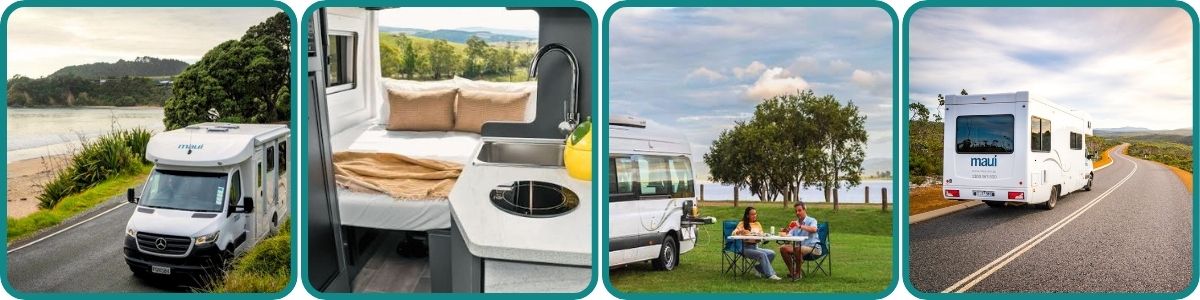
| 6-berth motorhome (Maui, Star RV, Let’s Go) | 6 | $250-$360+ | Full self-contained, newer fleet, most comfortable |
The costs that are not in the headline price
| Cost | Typical amount | How to avoid or reduce it |
|---|---|---|
| Excess reduction (insurance) | $35-$50 a day standard, $50-$65 premium | You almost certainly need it. Budget it as a line item, not an extra |
| One-way fee | $150-$800 depending on route. Sydney to Melbourne typically $150-$250 | Do a loop, or take a relocation deal |
| Under-25 surcharge | $20-$50 a day | Have the over-25 in the group be the named driver, if there is one |
| Cleaning fee | $200-$500 if returned dirty or with a full toilet cassette | Empty the tanks, sweep it out, spend $20 on cleaning supplies |
| Fuel penalty | $200-$400 if returned short on the wrong policy | Read the fuel policy at pickup, photograph the gauge both ways |
| Tolls | $30-$100 for a typical trip, plus admin fees of $15-$30 per unpaid notice with some operators | Take the operator’s toll pass if offered, or confirm how they bill |
| Bond card fee | Some operators charge around 2% on the bond, non-refundable. On a $7,500 bond that is $150 gone | Ask before booking. It is buried in the terms |
| Campsite fees | $0-$89 a night depending on the site | Mix paid holiday parks with free and low-cost bush camps |
The Depots, and How to Reach Them
There is no campervan counter at Sydney Airport. Every major operator sits in a cluster of light industrial streets between 6 and 18 kilometres from the terminals, and almost all of them are on the south side.
- Botany and Banksmeadow is the main cluster, roughly 5-10 minutes from the airport. Jucy, Spaceships, Britz, Maui, Mighty and Travellers Autobarn all operate from here. Travellers Autobarn is at 1C McPherson Street, Banksmeadow (Mon-Fri 9am-5pm, Sat 9am-1pm, closed Sundays and public holidays). Spaceships is at 1717 Botany Road, Banksmeadow, and is one of the few offering genuine 24/7 contactless pickup, with staff on site 9am-4pm weekdays.
- Taren Point, roughly 23 minutes south, is where Apollo, Cheapa Campa and Star RV operate.
- Como is home to Awesome Campers.
- There are no depots on the Northern Beaches or North Shore. If you are staying in Manly, budget an hour each way just to collect the van.
Getting there from the airport: a taxi or rideshare to the Botany depots runs about $20-$25 and takes 5-10 minutes. From the CBD by public transport: train to Redfern, then bus 309 from Regent Street, alighting on Botany Road near Exell Street. Allow about 35 minutes.
Practical detail most people miss: check the depot’s closing time against your flight. Several close at 5pm on weekdays, 1pm on Saturdays, and not at all on Sundays and public holidays. A Sunday arrival with a Sunday-closed depot means a night in a hotel you did not budget for.
Who’s who among the operators
- Budget: Spaceships, Jucy, Travellers Autobarn, Hippie Camper, Wicked Campers, Camperman, Awesome Campers, Cheapa Campa. Older fleets (typically 5-13 years), lower rates, fewer inclusions. Read recent reviews for whichever one you pick, because condition varies enormously across this tier.
- Mid-range: Britz, Mighty, Apollo. Newer vehicles, more comfort, proper bathrooms on the larger models.
- Premium: Maui, Star RV, Let’s Go Motorhomes. Near-new fleets, full self-containment, priced accordingly.
- Peer-to-peer: Camplify, the Airbnb of campervans, with more than 21,000 vehicles listed nationally from around 11,900 private owners. You often get a better vehicle for the money and pickup can be closer to where you are staying. Hirers pay a 15% booking fee plus a service fee of roughly $30-$100. Damage protection and 24/7 roadside assistance are included, and a bond still applies. The trade-off is that owners approve each booking individually, so it is less certain than a corporate depot, and there is no counter to walk into if something goes wrong at 9pm.
Insurance and the Bond, the Part That Ruins Trips
This is the single most important section on this page, so read it before you get to a depot counter with a queue behind you.
Every rental legally includes basic third-party cover. What you are offered at pickup is not “insurance” in the ordinary sense. It is excess reduction: buying down your own financial liability if the van is damaged.
Take it or leave it, and here is the arithmetic:
| Option | Daily cost | Your liability (bond held) | Reality |
|---|---|---|---|
| Basic (take nothing extra) | $0 | $3,000-$7,500 | The full bond is held on your credit card for the whole trip. A single windscreen chip can eat your entire credit limit for a month |
| Standard excess reduction | $35-$50 | $500-$1,000 | What most travellers should buy. Usually covers one windscreen chip and typical damage |
| Premium or zero excess | $50-$65 | $0-$200 | Worth it for first-timers, long trips or anyone who will not sleep otherwise |
Three things the counter will not volunteer:
- The bond is charged, not just “held”, by some operators, and several add a card fee of around 2% that is never refunded. On a $7,500 bond that is $150 you simply do not get back. Ask about this specifically before you book.
- Refunds take 14-21 business days as standard, and 30-60 days if there is any dispute. If you have another booking that needs credit availability, plan around it.
- Even premium cover has exclusions. Single vehicle rollovers, water damage, off-road use, overhead damage (branches, low awnings, car park roofs), and driving on unsealed roads are the usual carve-outs. Ask directly: “what damage is still not covered with your top package?” The answer is the part that matters.
A cheaper route worth knowing: standalone rental excess policies from third-party insurers often cost a fraction of the depot rate for trips of three weeks or more. You still have to front the bond, but you claim it back afterwards. It suits people with credit headroom and patience, not people travelling on a tight card limit.
Licence, Age and ID
- Full car (class C) licence required. Learner and provisional (P plate) licences are refused by essentially every operator.
- Most require you to have held that licence for at least one year, sometimes two.
- Minimum age is generally 21, though a handful of budget operators go to 18 or 19. Drivers aged 21-24 pay a young driver surcharge of $20-$50 a day and often face restricted vehicle choice and higher excess.
- Overseas licences: if it is in English, it is fine on its own. If it is not, you need an International Driving Permit or a certified NAATI translation. A NAATI translation can be arranged inside Australia if you have arrived without an IDP, which is the fix nobody tells you about at the counter.
- Standard campervans and motorhomes under 4.5 tonnes need no special licence class. You can drive a 6-berth motorhome on an ordinary car licence.
One-Way Hire and the $1-a-Day Relocation Loophole
One-way rentals are widely available and popular, because the natural Australian road trip is a line rather than a circle. Sydney to Melbourne, Sydney to Brisbane, Sydney to Cairns are all standard routes.
The catch is the one-way fee, which is rarely shown until checkout. Sydney to Melbourne typically runs $150-$250. Longer or less popular directions climb toward $800.
The workaround is relocation hire. Rental companies constantly need vehicles moved back to the depot they came from, and they will practically give them away to make it happen. Sites like Imoova and Transfercar list these. Sydney to Melbourne campervan relocations at $1 per day with a fuel credit (often around $150) appear regularly, as do Sydney to Brisbane runs.
The honest trade-off: relocations come with a fixed departure date, a fixed destination and a tight allowance of days, typically just enough to drive it directly with one or two stops. You still pay for insurance, which is usually compulsory on these deals and is where the real cost sits. If your dates are flexible, this is the best value in Australian travel. If your dates are locked to a flight, do not gamble on one appearing.
Where You Can Actually Sleep
This is where visitors get fined, so be clear on it.
Sleeping in a vehicle is not illegal in New South Wales, provided the vehicle is legally parked. But the City of Sydney prohibits sleeping overnight in a vehicle, including campervans and motorhomes, outside a designated campsite, and many coastal councils have similar rules with active enforcement around beaches and scenic waterfront parking. Illegal camping fines start at $110 on the spot and reach $2,200, with court attendance notices carrying far higher maximums for repeat or serious offences. Councils on the Central Coast and Mid North Coast have both run publicised crackdowns.
Enforcement in Sydney is relatively relaxed on ordinary suburban streets and relentless at the postcard spots. The rule of thumb from people who do this often: the better the view, the more certain the check.
Holiday parks near Sydney
- Sheralee Tourist Caravan Park, Rockdale. The closest designated campsite to the CBD, about 20 minutes away and convenient to the airport depots.
- Lane Cove River Tourist Park (Discovery Parks Lane Cove), inside Lane Cove National Park, roughly 20 minutes from the city. Powered sites from around $60 a night for two. The nicest of the close-in options by a distance.
- NRMA Sydney Lakeside Holiday Park, North Narrabeen. Right on Narrabeen Lagoon with the beach across the road, 25-45 minutes from the CBD depending on traffic. Powered sites from around $85. Consistently the best-rated park near Sydney, and priced like it.
- Grand Pines Tourist Park, Ramsgate. Handy to the southern depots if you have a late return.
The NSW national parks change you should know about
From July 2026 the NSW National Parks and Wildlife Service is rolling out a new six-tier camping fee system, ranging from free up to $89 a night for premium campgrounds in peak season. Tier 1 sites, the basic bush clearings, become entirely free and require no booking at all. Around 86% of campgrounds fall into tiers 2 to 5. Booking fees are being removed, per-person surcharges are going, and refunds of up to 80% will be available for cancellations. Check the NSW National Parks site before you book, because final tier assignments are still being published.
Free and cheap camps within striking distance
- Cathedral Reserve, Blue Mountains. Free, rainforest setting, toilets and fire pits, a strong base for Blue Mountains walks. Blackheath Glen Reserve nearby is the backup.
- Bendeela Recreation Area, Kangaroo Valley. About $6 for a stay of up to seven days, with toilets, potable water and a dump point. Famous for the wombats that wander through camp at dusk.
- Green Patch, Jervis Bay and Depot Beach, North Durras for the South Coast beaches.
- Killalea Regional Park, Kiama for surf breaks and hot showers.
- Diamond Head, Crowdy Bay National Park and Gillards Beach, Mimosa Rocks for oceanfront bush camping.
- Glenworth Valley, Central Coast and Patonga Caravan Park as easy first-night stops heading north.
Download WikiCamps or CamperMate before you leave the depot. Both show council-approved overnight parking, dump points, potable water and free camps, and both are more reliable than guessing.
Driving a Campervan In and Around Sydney
Tolls
Sydney’s motorway network is comprehensively tolled and entirely cashless. The Harbour Bridge and Tunnel, Eastern Distributor, Cross City Tunnel, Lane Cove Tunnel, M2, M4, M5, M7, WestConnex and NorthConnex all charge electronically.
The detail that catches motorhome drivers: vehicles over 2.8 metres high are charged the Class B (heavy vehicle) rate on NSW toll roads, even if the vehicle weighs under 4.5 tonnes. On a large motorhome that roughly doubles your toll bill. Ask the operator how tolls are handled. Some supply a tag and bill you at cost, some charge a per-transaction admin fee, and some will hit you with $15-$30 per toll notice if one goes unpaid. Getting this wrong is a slow-motion invoice that arrives weeks after you fly home.
Height and clearance
Sydney Harbour Tunnel has 4.4 metres of clearance and NorthConnex has 5.1 metres, so the tunnels themselves are not the problem. Underground and shopping centre car parks are. Most are signed at 2.0 to 2.3 metres, which is well under the roof of any hi-top van. Write your vehicle’s height on a sticky note and put it on the dashboard on day one. Every experienced motorhome driver does this, and the ones who do not have a story about an awning.
Parking
Central Sydney parking is expensive and, for a long vehicle, frequently impossible. Some CBD spots run over $20 an hour. City of Sydney car parks are more reasonable (the Goulburn Street car park starts from around $9 an hour) and pre-booking through a service like Parkopedia or Share with Oscar brings that down further. Most campervan travellers do the sensible thing: park in a suburb near a train station and catch public transport in.
Never park a campervan in a clearway, loading zone, bus zone, works zone or taxi zone. Clearway enforcement in Sydney is aggressive and includes towing.
The basics for overseas drivers
Drive on the left. Roundabouts run clockwise. Seatbelts and child restraints are compulsory. The blood alcohol limit is 0.05 for full licence holders and zero for learners and provisional drivers. Default speed limits are 50km/h in built-up areas and 100km/h on rural roads unless signed otherwise, with school zones dropping to 40km/h at posted times on school days. Watch for wildlife at dawn and dusk, and avoid driving country roads at night in your first week.
Where to Actually Go
The van is only worth it if you use it. Realistic options from Sydney:
- Blue Mountains, 2-3 days. Ninety minutes west. Cathedral Reserve or Blackheath Glen as a free base, Grand Canyon and Wentworth Falls walks, and enough cold air at night to justify the heater.
- South Coast, 5-7 days. Kiama, Jervis Bay, Murramarang, Narooma, Mystery Bay. Australia’s best beach camping and the reason most locals own a van.
- North to Port Macquarie, one week return. Central Coast, Newcastle, Myall Lakes, Crowdy Bay. Easy driving, good campgrounds.
- Sydney to Brisbane one-way, 7-14 days. The classic. Byron Bay, Yamba, Coffs, the Myall Lakes. Seven days is brisk, fourteen is comfortable.
- Sydney to Melbourne one-way, 7 days. Down the Sapphire Coast through Eden and Croajingolong, or inland through the high country. The route with the most $1 relocation deals.
A fast trip south to Eden and back takes about a week. North to Coffs Harbour and back needs about two, or one week if you turn around at Port Macquarie.
What Locals Know
Book three months out for anything between December and February. Campervan pricing does not behave like hotel pricing. There are no last-minute bargains in peak season because demand simply exceeds fleet size. Christmas, January, Easter and NSW school holidays are the four periods where discounts stop existing.
Winter is the value season and the weather is fine. Sydney averages around 17°C by day in July. Coastal NSW in June through August is empty, cheap and perfectly pleasant if you have a decent sleeping bag.
Lie on the bed before you sign. Actually lie on it. Budget van beds are frequently 1.8 metres or shorter, which is a genuine problem if anyone in your party is tall. This is the most common regret in campervan reviews and it is entirely avoidable in the two minutes you have at the depot.
Spend fifteen minutes filming the vehicle at pickup. Walk around it with your phone recording, narrating every scratch, dent, rust spot and worn tyre. Open the cupboards, run the taps, test the fridge on both power sources, check the gas, confirm the spare tyre exists. Get staff to note existing damage on the form. Travellers who do this get their bond back in about twelve days. Travellers who do not get to argue about a scratch for two months.
Fuel is not priced the same across Sydney. Use PetrolSpy or FuelCheck. The difference between a Botany service station and one twenty minutes inland can be 30 cents a litre, which on an 80-litre motorhome tank is real money.
The airport depots are busiest between 9am and 11am. Book a midday pickup and you will spend twenty minutes at the counter rather than ninety.
Empty the toilet cassette and the grey water before you return it. Cleaning fees of $200-$500 are usually triggered by exactly this, and every holiday park and most highway rest areas near Sydney have a dump point.
Common Issues and How to Avoid Them
Bond refunds that take forever
The most common complaint in Australian campervan hire, across every operator. Standard release is 14-21 business days. Disputed damage stretches that to 30-60. The fix is documentation at pickup, not argument at return.
Damage disputes over things that were already there
Vans work hard and arrive with history. If the condition report is a photocopied outline with three ticks on it, that is not documentation, it is an invitation. Add your own photos and email them to the depot the same day so there is a timestamped record outside the company’s system.
Vehicles that are not as clean or as functional as advertised
Reports of dirty vehicles at pickup, awnings that fail on day four and mechanical niggles are common enough in the budget and mid tiers to be worth planning for. Check the roadside assistance arrangement before you leave and save the number. Reputable operators cover breakdown recovery and will arrange a replacement vehicle for mechanical failure, though not usually for damage you caused.
The insurance upsell at the counter
Decide your excess reduction position before you arrive, not while a queue forms behind you. The counter is designed to sell it, and the sales pressure is real. It is also, for most people, the right purchase. Just make the decision calmly.
Hidden fees at checkout
One-way fees, young driver surcharges, airport fees, additional driver fees, ferry surcharges and out-of-hours pickup fees are typically added at the final step of a booking, after you have spent twenty minutes configuring the van. Price two or three operators to the final checkout screen before deciding. The cheapest headline rate is often not the cheapest total.
Peer-to-peer specifics
Camplify and similar marketplaces are covered by damage protection and roadside assistance, but consumer advocates note that marketplace cover is not the same as a rental company’s fleet insurance, and that the terms vary by listing. Read the individual vehicle’s protection tier and bond amount rather than assuming they are uniform, and confirm what happens if the owner cancels close to your date.
Trade-offs
What works: one bill instead of three, a kitchen that saves you $80 a day on eating out, genuinely spectacular coastal and mountain camping within two hours of the city, unlimited kilometres on most standard vans, and a road network that makes the east coast easy to drive.
What does not: the bond can lock up thousands of dollars for a month, fuel on a large motorhome is punishing, Sydney itself is hostile to the vehicle, peak season pricing is brutal, and the paperwork and fee structure is genuinely designed to confuse. Add the real possibility of a bad night’s sleep if you did not check the bed.
Is It Worth It?
For a trip of seven days or more that leaves Sydney, yes, clearly. Two people in a mid-range van for a fortnight down the South Coast will spend less than the equivalent in motels and car hire, eat better, and wake up somewhere no hotel can put them.
For a trip of three or four days, the maths gets thin once you add insurance, the one-way fee and campsite costs. A car and a couple of cabins often wins.
For a Sydney-only trip, no. Do not do it. Every hour you spend looking for legal parking is an hour you did not spend at the beach.
The version worth having is simple. Collect the van at Botany by mid-morning, be through the Royal National Park by lunch, and be parked at Bendeela by late afternoon with the kettle on, waiting for the wombats to turn up.
Frequently Asked Questions
How much does it cost to hire a campervan in Sydney?
Budget campervans start around $49-$70 a day, mid-range motorhomes run $100-$200, and large self-contained motorhomes with a bathroom run $230-$360 or more. Add $35-$50 a day for excess reduction, which most travellers should treat as compulsory. Peak season (December to February, Easter, school holidays) is substantially higher and rarely discounted.
Can I pick up a campervan at Sydney Airport?
Not at the terminal. All the major operators sit 6-18 kilometres away, mostly in Botany and Banksmeadow, with Apollo and Star RV at Taren Point. A taxi from the airport to the Botany depots costs about $20-$25 and takes 5-10 minutes. Several offer free shuttles, and Spaceships offers 24/7 contactless pickup.
How old do I have to be to hire a campervan in Australia?
Generally 21, though some budget operators accept 18 or 19 year olds. Drivers aged 21-24 pay a young driver surcharge of roughly $20-$50 a day and face a higher excess and a smaller choice of vehicles. You need a full car licence, held for at least a year, and learner or provisional licences are not accepted.
Do I need an International Driving Permit to hire a campervan in Sydney?
Only if your licence is not in English. An English-language overseas licence is accepted on its own. Otherwise you need an International Driving Permit or a certified NAATI translation, and a NAATI translation can be organised within Australia if you have already arrived without an IDP.
How big is the bond on a campervan rental?
Typically $3,000-$7,500 if you take only the basic included cover. Buying standard excess reduction at $35-$50 a day drops your liability to $500-$1,000, and premium cover at $50-$65 a day drops it to $0-$200. Some operators charge a non-refundable card fee of around 2% on the bond, and refunds usually take 14-21 business days.
Can I sleep in a campervan on the street in Sydney?
No. The City of Sydney prohibits sleeping overnight in a vehicle outside a designated campsite, and many coastal councils enforce similar rules, particularly near beaches. Fines start at $110 and rise to $2,200, with higher penalties for repeat offences. Use a holiday park, a national park campground or a council-approved site instead.
Where is the closest campsite to Sydney CBD for a campervan?
Sheralee Tourist Caravan Park in Rockdale is the closest designated site, about 20 minutes from the city. Lane Cove River Tourist Park inside Lane Cove National Park is a similar distance to the north and considerably more pleasant, with powered sites from around $60 a night. NRMA Sydney Lakeside at North Narrabeen is the best-regarded option, from around $85.
Are there really $1-a-day campervan rentals from Sydney?
Yes, through relocation platforms like Imoova and Transfercar, where rental companies need vehicles moved back to another depot. Sydney to Melbourne and Sydney to Brisbane relocations at $1 a day, often with a fuel credit of around $150, appear regularly. The catch is fixed dates, a fixed destination, a tight number of travel days, and compulsory insurance that carries the real cost.
Do campervans pay more on Sydney toll roads?
Yes if they are tall. Vehicles over 2.8 metres in height are charged the Class B rate on NSW toll roads even when they weigh under 4.5 tonnes, which roughly doubles the toll on a large motorhome. All Sydney tolls are electronic with no cash option, so confirm with your rental company how tolls are billed and whether an admin fee applies.
Is a campervan cheaper than hotels and a hire car in Australia?
For trips of a week or more covering real distance, usually yes, because you combine accommodation, transport and self-catering into one cost. For short trips, or trips based in one city, the savings disappear once you add excess reduction, one-way fees, fuel and campsite charges. The break-even point for most travellers sits at around five to seven days.
What happens if the campervan breaks down?
Reputable operators include 24/7 roadside assistance and will arrange repairs or a replacement vehicle for mechanical failure. Damage you caused is treated differently and comes out of your excess. Confirm the roadside number at pickup and save it in your phone, because mobile coverage on parts of the NSW coast and inland is patchy.
Useful Links
- NSW Government guide to using toll roads
- Service NSW toll roads and toll notices
- NSW National Parks camping and accommodation, for the new tiered fee system
- NSW Centre for Road Safety, for road rules and speed limits
- Imoova and Transfercar, for $1-a-day relocation deals
- Camplify Sydney, for peer-to-peer campervan hire
- Apps worth downloading before you go: WikiCamps, CamperMate, PetrolSpy or FuelCheck, Parkopedia, and Linkt for tolls
Prices, fees and rules verified July 2026. Campervan pricing is highly seasonal and operator terms change, so confirm the total cost at checkout and read the excess and fuel policies before you sign anything at the depot.