
Orange sits up in the Central West at almost 900 metres above sea level, which makes it something different from most Sydney weekend trips: a cool-climate wine region with proper seasons, cold enough for the occasional dusting of snow in winter, warm and green through the produce-heavy summer. Add Bathurst’s motor-racing history roughly halfway there and the whole Blue Mountains crossing at the start, and this is as much a road trip as a destination. It’s also a route currently affected by a major closure worth knowing about before you set off, so read the driving section carefully even if you’ve done this trip before.
| Mode | Time | Typical Cost | Best For |
|---|---|---|---|
| Car | 3h 22min normally (255km), longer with current detour | Fuel + tolls ~$45-60 | Flexibility, wine touring, Bathurst stopover |
| Train (Blue Mountains + connecting coach) | ~4h 58min | From ~$27.77, no booking | Budget travel, scenic Blue Mountains leg |
| Train (Central West, direct XPT) | ~4h 43min-4h 54min | From ~$35, Economy or First Class | One seat the whole way, no changeover |
| Plane (multiple carriers) | ~55min flight | Varies, book ahead | Time-poor travellers, business trips |
Who It Suits – Why Head to Orange?
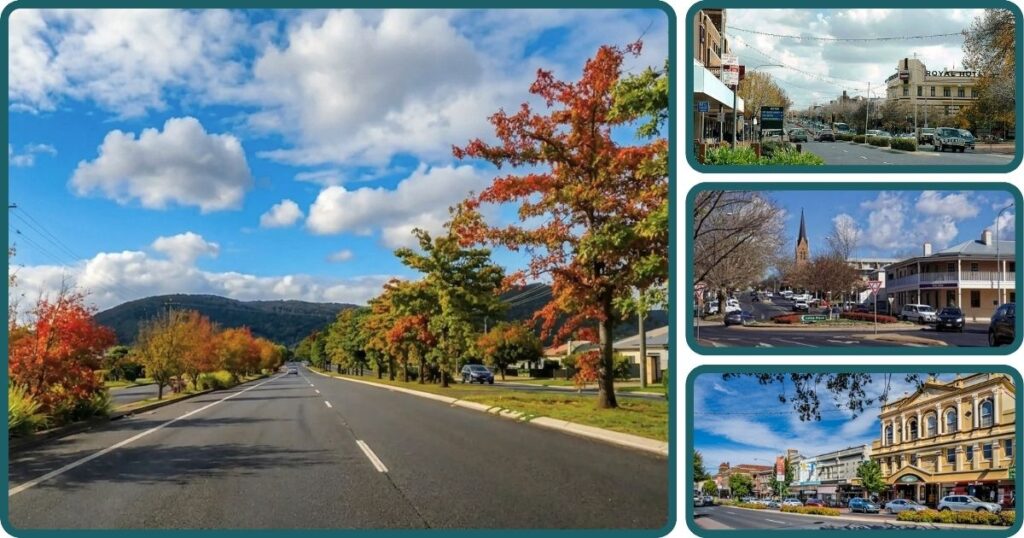
Orange works best for wine lovers and food-focused travellers chasing the region’s cool-climate reds and whites, anyone keen to combine it with Bathurst’s Mount Panorama on the way through, and travellers who don’t mind a genuine change of climate from Sydney’s coastal warmth.
It’s less suited to a quick day trip given the distance; most people either drive up for a proper weekend or fly in for a shorter, more time-efficient visit.
Families do well here too, with Jenolan Caves (when reopened) as a natural stop on the drive and enough space in Orange itself (parks, produce markets, an easy-to-navigate town centre) to keep kids entertained without a packed itinerary.
Sydney to Orange by Car
The standard route runs via the Great Western Highway/A32 through the Blue Mountains (Katoomba, Mount Victoria), down to Lithgow, then on through Bathurst to Orange, about 255km and normally around 3 hours 22 minutes. In practice, build in extra time regardless of the current road situation below, since this route climbs and descends through mountain terrain the whole way.
Important: Victoria Pass Closure (Current as of 2026)
The Great Western Highway at Victoria Pass, near Mount Victoria, has been closed since March 2026 after engineers found serious structural deterioration in Mitchell’s Causeway, a 200-year-old heritage bridge on the route. The road is expected to remain closed until the second quarter of 2027, so anyone planning this drive between now and then needs to build the detour into their trip.
Transport for NSW’s preferred detour is via Bells Line of Road and Chifley Road between Windsor and Lithgow (itself a scenic alternative route through Bilpin’s apple orchards and past Mount Tomah Botanic Garden); the alternate option runs via Darling Causeway from Mount Victoria to Lithgow through the village of Bell.
Either way, allow roughly an extra 30 minutes to an hour, more during weekday peak periods (Monday-Thursday 8:30-10am and 2-3:30pm, all day Friday), and be careful through Lithgow’s school zones (8-9:30am and 2:30-4pm, 40km/h). Check Live Traffic NSW before you leave for the latest detour signage and conditions.
Attractions and Stopovers En Route
- Jenolan Caves is a worthwhile detour off the main route, one of the world’s oldest and most extensive cave systems, with several tour options and impressive formations; allow half a day if you want to do it properly. (Note that it is expected to reopen in 2027).
- Bathurst, roughly halfway, is worth a proper stop rather than a quick fuel break: Mount Panorama’s public circuit road is open to regular traffic outside race events (yes, you can drive a lap of the famous Bathurst 1000 circuit at normal speed limits), the National Motor Racing Museum sits at the base of the mountain, and Abercrombie House offers heritage tours. It’s a sensible overnight stopover if you want to split the drive.
- Millthorpe, a small heritage village just before Orange, has a well-preserved main street with cafes and antique shops worth a short stop.
- Mount Victoria itself is a small, historic Blue Mountains village worth a coffee stop if the detour routes you through it.
Road Rules, Speed Cameras and Enforcement
- The Great Western Highway through the Blue Mountains has mobile and fixed camera enforcement around the main townships (Katoomba, Mount Victoria, Lithgow), with reduced speed zones through built-up areas; NSW Police increase presence around long weekends and school holidays with double demerits in effect.
- Speed limits vary considerably on this route, from 100-110km/h on open sections down to 40-50km/h through town centres and school zones, so watch signage closely, especially through the current detour route where temporary and reduced limits apply.
- Winter driving conditions are a real factor at this altitude: Orange sits at around 862m elevation, one of the highest cities in Australia, and gets frost and occasional snow in winter (usually June-August). Black ice is a real risk on cold mornings on the roads around Orange, Bathurst and through the Blue Mountains crossing.
Breakdown Cover and Rental Vehicles
NRMA covers this entire route, though response times can be longer in the more remote stretches past Lithgow, so it’s worth having supplies (water, warm clothing in winter) in the car regardless of coverage. Major rental companies operate in Sydney and there are rental desks at Orange Regional Airport, making one-way hire a realistic option if you’re flying one direction and driving the other; book ahead given the smaller local fleet compared to Sydney.
Driving With Kids
This is a longer drive even before accounting for the current detour, so plan a proper stop at Bathurst or Jenolan Caves to break it up rather than pushing straight through. Jenolan Caves’ shorter, easier cave tours suit most kids well, and Mount Panorama’s drive-the-circuit novelty is a genuine hit with car-mad kids. Pack extra layers if you’re travelling in winter, since the temperature drop between Sydney and Orange can be significant.
Sydney to Orange by Train
There are two different ways to do this by train, and it’s worth knowing both since the original combination isn’t the only option any more. The Blue Mountains intercity train plus connecting coach is the no-booking, budget route: take the Blue Mountains Line from Sydney to Lithgow (around 2 hours 48 minutes on Opal), then a connecting NSW TrainLink coach from Lithgow through to Orange (around 1 hour 55 minutes). Total journey time is around 4 hours 58 minutes, with fares from about $27.77, and timetables are available at transportnsw.info without needing to book ahead.
The other option is the Central West XPT, a single direct service the whole way from Sydney’s Central Station through to Orange (and on to Dubbo) without any changeover. This one is bookable in advance with Economy and First Class fares, buffet car and onboard toilets, and takes around 4 hours 43 minutes to 4 hours 54 minutes depending on the specific service, with fares starting from around $35. If you’d rather stay in one seat the whole way and don’t mind paying a bit more, this is the simpler option; if you want the cheaper no-booking route and don’t mind the changeover at Lithgow, take the Blue Mountains train and coach instead. Both are genuine, current options; book the XPT ahead at transportnsw.info/regional-bookings if that’s the one you want, particularly around Orange’s wine and food festivals when demand is higher.
Train With Kids
The direct XPT is the easier option for families given the single seat and onboard toilet/buffet car, avoiding the changeover hassle at Lithgow with kids and luggage in tow. If you’re taking the Blue Mountains train and coach option, the scenic mountain crossing on the first leg is engaging for kids, but plan for the connection at Lithgow to take a bit of extra patience.
Sydney to Orange by Plane
Orange Regional Airport is served by multiple carriers in 2026, including Rex, QantasLink and Link Airways, with flight time around 55 minutes. One thing worth knowing: Rex has periodically paused its early-morning and late-evening Orange stops during winter months (2026 saw a pause from June 21 to August 15) due to fog and low cloud that have historically caused diversions back to Sydney, while continuing midday services; QantasLink and Link Airways have kept full service through the same period using similar aircraft. If you’re flying in winter, book a midday service where possible and build in some schedule buffer given the genuine weather risk at this elevation.
Airport Transfers
Orange Regional Airport is close to town, around 10-15 minutes from the CBD by taxi or rideshare, with rental car desks on site if you want to combine flying up with driving out to the wineries or Bathurst. There is no scheduled public transport service directly from the airport into town.
Flying With Kids
At under an hour, this is an easy flight for most kids, and the short airport transfer at the Orange end means less time in transit overall than driving or the train. Winter fog delays are the main thing to plan around if travelling with young children on a tight schedule.
Car, Train or Plane: Which Should You Choose?
| Traveller Type | Best Option | Why |
|---|---|---|
| Wine touring, flexible itinerary | Car | Freedom to visit wineries and Bathurst along the way |
| Budget travel, no rush | Train (Blue Mountains + coach) | Cheapest, no booking required |
| Want one seat, no changeover | Train (Central West XPT) | Direct, bookable, buffet car |
| Time-poor or business trip | Plane | Under an hour, multiple carriers |
| Travelling during the road closure | Train or Plane | Avoids the Victoria Pass detour delays entirely |
Is It Worth Flying Instead of Driving or the Train?
While the Victoria Pass closure is in effect (through to Q2 2027), flying or the train make more sense than driving unless visiting the wineries or Bathurst along the way is part of the plan. Once the road reopens, driving becomes the more compelling option again for anyone who wants to build in stops, given how much there is to see between Sydney and Orange. For a straightforward point-to-point trip with no interest in the journey itself, flying is the fastest, and the train (either option) remains the easiest way to arrive without a car, especially useful given the current road situation.
Frequently Asked Questions
Is the Great Western Highway to Orange currently closed?
The highway itself is open, but Victoria Pass near Mount Victoria has been closed since March 2026 due to structural issues with a heritage bridge, with reopening expected in the second quarter of 2027. A signed detour via Bells Line of Road/Chifley Road or Darling Causeway adds roughly 30 minutes to an hour to the drive.
Does the train from Sydney to Orange require a changeover?
Only if you take the budget Blue Mountains train plus connecting coach option, which changes at Lithgow. The Central West XPT runs direct from Sydney to Orange with no changeover, though it needs to be booked ahead and costs a bit more.
Does it really snow in Orange?
Yes, occasionally. At around 862m elevation, Orange is one of the higher-altitude cities in Australia and gets frost and the odd light snowfall in winter (June-August), which is part of what makes it a proper cool-climate wine region.
Which airlines fly to Orange?
Rex, QantasLink and Link Airways all serve Orange Regional Airport as of 2026. Rex has paused some early and late Orange stops during past winter periods due to fog, so booking a midday flight is a safer bet in winter months.
Is Bathurst worth stopping at on the way?
Yes. Mount Panorama’s circuit road is open to normal traffic outside race events, the National Motor Racing Museum is at its base, and it makes a sensible halfway stopover if you want to split the drive into two easier legs.