
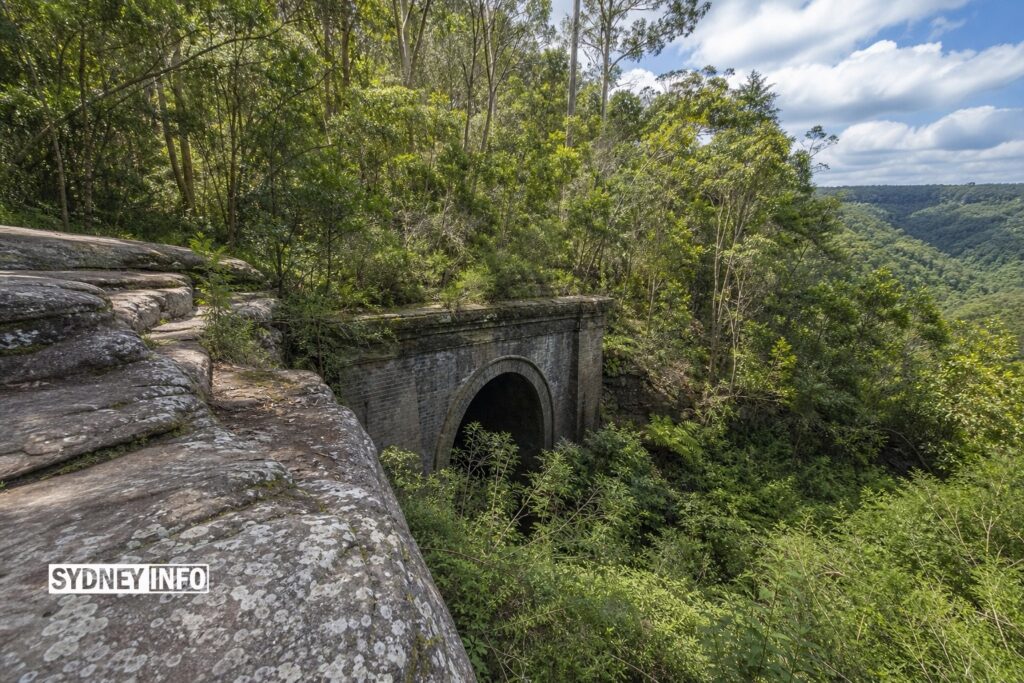
On 27 July 2026, Blue Mountains City Council confirmed that thousands of people walked, ran, and cycled through the Lapstone Hill Tunnel over two weekends — a 134-year-old railway passage that once stored mustard gas. The sell-out crowds, who snapped up every free session in July and August, have supercharged a campaign to permanently open the Glenbrook landmark as a cycling and walking link.
Council is now seeking around $15 million from the NSW and Australian governments to convert “a dormant heritage asset into a landmark gateway destination for the Blue Mountains and Western Sydney.” The project would add shared pathways, drainage, lighting, car parking, a pump track, heritage interpretation, and visitor amenities to a site that currently sits locked outside scheduled open days.
“The community’s message could not be clearer: they want Lapstone Hill Tunnel opened permanently,” said Cr Mark Greenhill, Blue Mountains Mayor. “Thousands of people seized this rare opportunity to experience the tunnel, and many more missed out. The vision is clear, the benefits are compelling and the community support is undeniable. What we need now is government investment to complete the job.”
The tunnel’s history is as unusual as the demand is strong. Built between April 1891 and December 1892 as a single-track deviation bypassing the steep Lapstone Zig Zag, it ran trains until about 1913 and later found a second calling as a WWII mustard gas storage facility. Listed on the NSW State Heritage Register in 2011, the 660-metre passage sits inside the Scenic Eastern Escarpment and is also tied to Arthur Streeton’s 1891 painting “Fire’s On”, which depicts a tunnel explosion that killed a worker named Edward Brown.
December 2024 open days drew roughly 1,500 visitors. The latest events — 25–26 July and 2 August — sold out so quickly through Eventbrite that council added an extra date. Sessions included guided heritage walks leaving from the Glenbrook Visitor Information Centre, trail runs led by Brendan Davies of Up Coaching, and self-guided access for walkers, runners, and cyclists. Many who missed out were turned away.
Council says the project would do more than preserve a hidden industrial relic. It would create a safe, off-highway active-transport connection from Western Sydney straight into the Lower Blue Mountains, pulling cyclists off the Great Western Highway and linking Glenbrook, Lapstone, Knapsack Reserve, the Nepean River precinct, and broader walking networks. “This is much more than a tunnel project,” Cr Greenhill said. “It will protect an important part of our railway heritage, support healthier lifestyles, improve cycling safety, strengthen our visitor economy and create new opportunities for recreation, cultural experiences and managed events.”
Previous state funding of about $4 million has covered early decontamination and studies. Council warns that without the new injection it risks losing that progress. The tunnel remains closed to the public outside sanctioned events, and no timeline exists for permanent opening. Future open days are planned in the interim, but anyone interested should keep an eye on council channels: past releases have booked out in hours.
For those who do snare a spot, public transport is viable. Glenbrook station on the Blue Mountains Line is the nearest stop, with a short walk or taxi to the meeting point at the visitor centre. Parking is limited until new facilities are built. Afterwards, you can stretch the day at nearby Knapsack Reserve or the Nepean River precinct, then refuel at Glenbrook village cafés and shops. The combination of rare underground heritage and active-transport potential sets the tunnel apart from typical Blue Mountains lookouts or bushwalks — stretching visitation into the lower mountains and giving Penrith and Leonay residents a day trip closer to home.
Related to This Story
Blue Mountains City Council
The local government authority for the City of Blue Mountains manages heritage sites, tourism infrastructure, and the Lapstone Hill Tunnel open-day events. It is leading the push for permanent public access.
Lapstone Hill Tunnel
A 134-year-old heritage-listed railway tunnel in Glenbrook, also known as the Glenbrook Tunnel, with a history of WWII mustard gas storage. Council seeks $15 million to turn it into a walking and cycling destination.
As the lobbying gathers pace, the council’s open days have quietly proved that a tunnel most locals had never entered can pull a crowd. The next step is turning a 19th-century engineering relic into a 21st-century community asset — one that hundreds of people are already willing to queue for.