
Quick Facts: Hornsby
Where Is Hornsby?
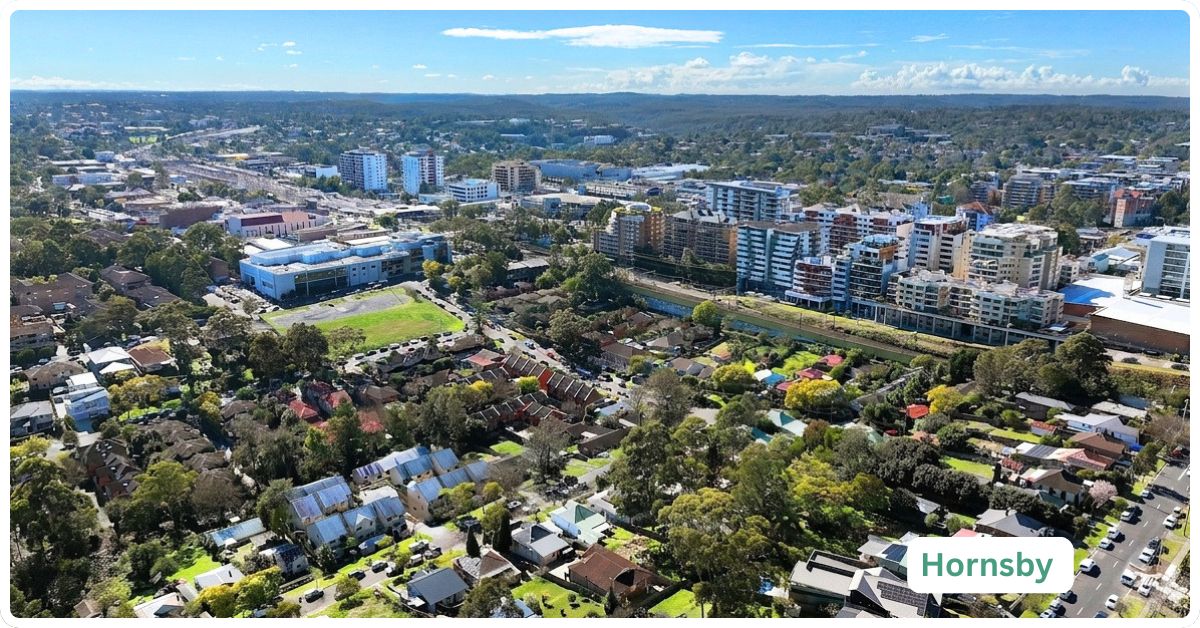
Hornsby sits at the northern edge of metropolitan Sydney, roughly 25 kilometres from the CBD, and serves as the de facto capital of Hornsby Shire. It occupies a commanding ridge position on the Pacific Highway, with the beautiful Hawkesbury River to the north and vast bushland reserves stretching in nearly every direction. To outsiders, Hornsby can feel like Sydney’s last major suburb before the city gives way to the Central Coast and Hunter regions and in many ways, that is precisely what makes it distinctive.
The suburb is the administrative and commercial heart of one of Australia’s largest local government areas by land size, yet it retains a relaxed, green-edged character that distinguishes it sharply from the denser suburbs of the inner north. The surrounding bush shapes daily life, from the wildlife that wanders into gardens to the fire risk that communities manage every summer.
Hornsby Suburb Map
A Brief History
The land around Hornsby has been home to the Darug and Guringai peoples for thousands of years, sitting near the boundary of two language groups whose territories met across the ridgelines and creek valleys of the northern bushland.
European settlement arrived progressively through the nineteenth century as timber-getters, orchardists, and small farmers pushed north along the ridge roads. The arrival of the Great Northern Railway in 1890 transformed Hornsby from a quiet rural stop into a significant junction town. The line branched here with one fork heading to Newcastle, another looping westward. That junction status cemented Hornsby’s role as a regional hub that it has never relinquished.
Throughout the mid-twentieth century, Hornsby grew steadily as a commuter suburb. The opening of Westfield Hornsby (originally a much smaller Lend Lease development) in the 1960s anchored retail activity in the town centre, and subsequent expansions have kept it as the dominant shopping destination for a wide catchment. The suburb’s identity today blends its railway heritage with a strong community pride in the surrounding natural environment.
Getting Around: Transport Links
Hornsby Station is one of the most strategically important train stations in the Sydney network, sitting at the intersection of multiple lines and serving as a terminus or interchange for a significant portion of northern Sydney commuters.
Train Services
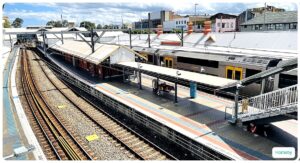 Three main line groupings converge at Hornsby. The T1 North Shore Line connects south through Chatswood, St Leonards, and North Sydney to the City Circle. The T9 Northern Line runs north through Berowra, Cowan, and into the Central Coast toward Newcastle. The T1 Western Line diverges here, heading via Strathfield to Parramatta and Penrith.
This means a Hornsby resident can reach the CBD in approximately 40 to 45 minutes by express service, with frequent trains throughout the day and evening. Moreover, they are well connected to the growing hubs of Western Sydney and to Newcastle to the north.
Bus Network
Hornsby is a major bus interchange serving routes that penetrate deep into the shire’s suburban and semi-rural pockets. Buses connect to Beecroft, Cherrybrook, Galston, Dural, Wisemans Ferry Road corridors, and across to Epping and Ryde. For residents of the surrounding shire who do not live near train stations, the Hornsby bus interchange is an essential transfer point.
Road Access
The Pacific Highway passes directly through the town centre, providing the main surface road corridor north and south. The M1 Pacific Motorway interchange at Berowra, a short distance north, gives Hornsby quick access to the freeway network. The Hills District is accessible via Old Northern Road or the M2 corridor from nearby suburbs.
Shopping and Retail
Westfield Hornsby is the centrepiece of retail activity for the entire shire and a large part of northern Sydney. It is one of the largest Westfield complexes in New South Wales, with a comprehensive range of department stores, fashion retailers, electronics, homewares, dining, and a substantial supermarket precinct. For residents within a 20-kilometre radius, it is often the default destination for major shopping.
Beyond Westfield, the High Street and surrounding blocks host a mix of independent retailers, specialty food stores, cafes, and service businesses that give the town centre a more local character. The Hornsby Mall, a pedestrianised section adjacent to the station, is a well-used community gathering space throughout the week.
The suburb also has strong representation from Asian grocery retailers and specialty food importers, reflecting its multicultural population and making it possible to source a wide range of Asian ingredients without travelling to the inner city.
Food, Cafes and Dining
Hornsby’s dining scene punches well above the weight you might expect from a suburban town centre. The suburb has developed a genuinely diverse restaurant and cafe culture driven partly by its multicultural demographics and partly by its role as a meeting point for a large regional catchment.
Asian Cuisine
Chinese, Korean, Japanese, Vietnamese, and Malaysian restaurants cluster around the town centre and the Westfield precinct. Several restaurants here have developed strong local reputations, drawing diners from well beyond Hornsby itself. The concentration of Asian eateries along Florence Street and the nearby laneways rivals some inner-west suburbs in variety if not in volume.
Cafes and Brunch
The café scene has matured considerably over the past decade. A number of specialty coffee roasters and brunch-focused cafes have established themselves in the town centre and surrounding residential streets, catering to the younger professional demographic that has grown in the suburb. Weekend brunch trade in particular is strong, with several venues requiring waits during peak hours.
Pubs and Casual Dining
The Hornsby Hotel and surrounding venues offer the traditional pub dining experience, with the added appeal of outdoor spaces that take advantage of the suburb’s elevated, breezy position. Pizza, burgers, and casual international fare are well represented throughout the area.
Parks, Bush and Outdoor Life
The natural environment is Hornsby’s greatest distinguishing asset. The suburb borders and in some cases is surrounded by significant bushland reserves that provide walking, cycling, and nature-based recreation of a quality rarely found this close to a major metropolitan centre.
Berowra Valley National Park
Stretching north of Hornsby and encompassing the dramatic Berowra Creek gorge, this national park offers serious bushwalking on trails that wind through sandstone ridges, heathland, and riparian corridors. The Berowra Waters area, accessible from Hornsby’s northern fringe, gives kayakers and small boaters access to beautiful sheltered waterways feeding toward the Hawkesbury.
Waitara Creek and Local Bushland
Closer to the town centre, Waitara Creek and its tributaries thread through bushland reserves that back onto residential streets. These local corridors provide habitat for native birds, lyrebirds, wallabies, and echidnas. Many Hornsby residents will tell you that backing onto bush is not a luxury but a standard expectation.
Cycling and Walking Trails
The area around Hornsby is being progressively connected through the Greater Sydney Green Grid walking and cycling network. Existing trails link across the shire, with the Fernleigh Track to the north and connections toward the Hills District making extended recreational journeys possible.
Schools and Education
Hornsby is home to several well-regarded schools that draw families from across the shire. Hornsby Girls High School and Asquith Boys High School are two selective-stream public high schools in the immediate area that attract strong academic cohorts. Knox Grammar School, one of Sydney’s best-known independent schools, is located in nearby Wahroonga, making the broader Hornsby corridor a significant educational precinct.
Primary schooling is well served by a network of local public schools including Hornsby North Public School and Waitara Public School, alongside a range of Catholic and independent primary options.
For tertiary students, the University of Technology Sydney (UTS) campus at Ku-ring-gai in nearby Lindfield, and the broader access to city universities via the T1 line, makes Hornsby a practical base for university-age residents.
Housing and Living
Hornsby offers a housing mix that is broader than many comparable suburban hubs. The town centre and its immediate surroundings have seen substantial apartment development over the past fifteen years, driven by the suburb’s transit node status and state government density targets. High-rise and mid-rise apartment buildings now define parts of the immediate station precinct, and this supply has introduced a more diverse rental and ownership market.
Moving outward from the centre, the housing stock transitions to older freestanding homes on generous lots, many backing onto bush or creek corridors. These properties represent the classic Hornsby lifestyle: established garden suburbs with native plantings, large backyards, and the kind of quiet that is hard to find closer to the city.
Property values in Hornsby sit at a meaningful discount to equivalent properties in the inner north and northern beaches, making it an attractive entry point for families who need train access to the CBD but want more space and a bush outlook.
Key Features
Is It Worth Visiting?
Hornsby is a destination rather than a passage for those who know what they are looking for. The combination of Westfield’s retail depth, the dining precinct’s genuine quality, and the immediate access to Berowra Valley National Park makes it worth the trip from anywhere in northern Sydney. If you are considering relocating, Hornsby offers one of the better value propositions in the north: strong train access, abundant green space, solid schools, and a town centre that actually functions. The bush backdrop is real, and for the right household, it is transformative. The trade-off is distance from the beaches and the inner city’s cultural density, but for families who prize space, quiet, and nature access, Hornsby consistently delivers.